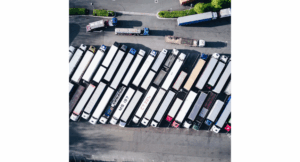


A recent unannounced hazardous materials safety enforcement initiative revealed that fewer than 13 percent of commercial vehicles inspected had out-of-service violations, highlighting a largely compliant industry while still identifying significant safety risks.
On Thursday, August 28, the Commercial Vehicle Safety Alliance (CVSA) shared the results from its annual hazardous materials and dangerous goods inspection effort. The five-day blitz, conducted from June 9 through June 13, aims to “reduce hazardous materials/dangerous goods incidents and encourage uniformity and consistency in the application of the regulations.”
Inspectors examined 4,629 commercial motor vehicles across the United States and Canada during the event. A total of 1,169 hazardous materials violations were found, with 598 of those resulting in vehicles being placed out of service until the issues were corrected.
CVSA reported that 45 jurisdictions participated in the blitz, including 35 U.S. states and 10 Canadian provinces. Vehicles with out-of-service violations were immediately removed from operation to prevent further risk.
“The transportation of HM/DG demands rigorous training and heightened compliance requirements,” CVSA said in a statement. “For motor carriers and drivers, safely transporting HM/DG is imperative to the safety of the driver, the public, and the environment.”
The most frequent violations identified in U.S. inspections were non-bulk placarding 104, bulk package marking 99, and bulk placarding 88.
Meanwhile, 831 vehicles, nearly 18 percent of those inspected, received CVSA decals. These decals indicate that no critical vehicle or specific cargo tank violations were found and remain valid for up to three months. Vehicles displaying a decal are typically not subject to re-inspection during that period.
For context, last year’s safety blitz involved 3,929 inspections, with over 85 percent of vehicles found to have no critical violations, showing consistent compliance improvements within the industry.
Source: Landline Media
Image Source: Jared Murray (Unsplash)
- Canada trucking
- commercial vehicle inspections
- commercial vehicle safety
- CVSA
- CVSA decals
- dangerous goods transport
- Fleet Safety
- hazardous materials safety
- HM/DG compliance
- motor carrier compliance
- out-of-service vehicles
- transportation safety
- truck safety
- trucking industry news
- U.S. trucking
- vehicle enforcement blitz