


From May 12 through May 14, enforcement officers across the United States, Canada, and Mexico will conduct the annual three-day inspection campaign known as International Roadcheck. The initiative is organized by the Commercial Vehicle Safety Alliance and focuses on commercial motor vehicle compliance, driver qualifications, and mechanical condition.
If you plan to run during that window, preparation matters. Inspectors will be working at weigh stations and temporary roadside sites, and most stops will involve the North American Standard Level I Inspection.
What Happens During a Level I Inspection
The Level I inspection is a 37-step review that covers both the driver and the vehicle.
On the driver side, inspectors check license validity, medical examiner’s certificate, record of duty status, Drug and Alcohol Clearinghouse status in the United States, seat belt use, and any required skill performance evaluation certificate. They also look for signs of alcohol or drug impairment. If a driver out of service violation is found, the driver is placed out of service and cannot operate the vehicle until the issue is resolved.
On the vehicle side, inspectors examine brake systems, cargo securement, coupling devices, driveline and driveshaft components, driver’s seat, fuel and exhaust systems, frame, lighting devices, steering mechanisms, suspension, tires, wheels, rims, hubs, and windshield wipers. Passenger-carrying vehicles also receive inspection of emergency exits and electrical systems in engine and battery compartments. If an out-of-service violation is identified, the vehicle cannot move until repairs are made.
Vehicles that pass a Level I or Level V inspection without critical violations may receive a CVSA decal valid for up to three months. That decal signals recent inspection compliance to enforcement personnel.
2026 Driver Focus: ELD Tampering
This year’s driver emphasis is on electronic logging device tampering, falsification, or manipulation.
During inspections, officers will review the record of duty status and look for false or manipulated entries, with specific attention to ELD tampering. Inaccurate entries sometimes stem from a misunderstanding of regulations and exemptions. In other cases, records are altered to conceal hours of service violations or driving time without proper edit tracking as required under federal rules.
Last year, falsification of the record of duty status was the second most cited driver violation at 58,382 violations. Five of the top 10 driver violations were related to hours of service or ELD compliance. That makes log accuracy a priority heading into this year’s Roadcheck.
2026 Vehicle Focus: Cargo Securement
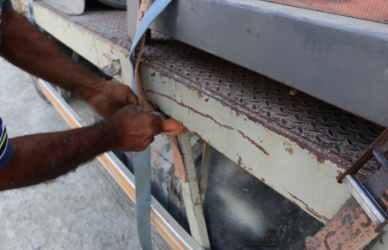
Cargo securement is the vehicle emphasis area for 2026.
Improper or inadequate securement can affect vehicle handling and create hazards if freight shifts or falls. In 2025, 18,108 violations were issued because cargo was not secured to prevent leaking, spilling, blowing, or falling. Another 16,054 violations involved vehicle components or dunnage not being properly secured.
Drivers hauling flatbed, specialized freight, or any load with blocking and bracing should review securement practices before May.
How to Prepare Now
Review your log procedures and make sure you understand editing requirements. Confirm your ELD is functioning properly and that you can produce records quickly at the roadside. Double-check medical cards and CDL status.
On the equipment side, inspect brakes, tires, lights, and cargo securement hardware before every trip. Address minor issues before they become out-of-service problems during a blitz.
International Roadcheck lasts only three days, but the data collected affects safety scores and enforcement trends for months. Being ready before May 12 keeps you moving while others sit.
Source: Truckers News