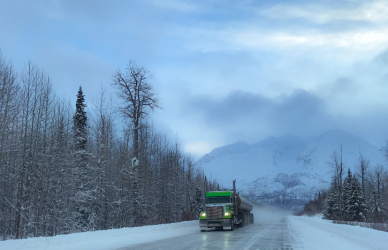



Truck drivers operating in Michigan today should be aware that seasonal weight limits are officially active.
The Michigan Department of Transportation began enforcing spring weight restrictions at 6 p.m. Tuesday, February 17. As of Wednesday, February 18, the restrictions are fully in effect across designated state highways in the southern portion of the Lower Peninsula.
Where Restrictions Apply
Weight limits are active on state trunkline highways beginning at the Indiana and Ohio state lines and extending north to and including:
- US 10 in Ludington in Mason County from the M 116 intersection
- East to US 127 in Clare County
- North on US 127 to M 61
- East on M 61 to US 23 in Standish, Arenac County
All Michigan state trunklines are included in the restricted area. These routes carry M, I, or US designations.
Drivers running loads through these corridors today should verify whether they are traveling on all-season or seasonal designated routes before proceeding.
Why Seasonal Limits Are Enforced
Each spring, Michigan reduces allowable axle weights to protect pavement during the thaw cycle.
When roads that have been frozen all winter begin to thaw from the surface downward, melting snow and ice saturate the softened ground. During the spring thaw, the roadbed softened by trapped moisture beneath the pavement makes it more susceptible to damage. This contributes to pothole problems already occurring due to this winter’s numerous freeze-thaw cycles.
Because subsurface layers weaken during this period, heavy axle loads can accelerate pavement failure even when road surfaces appear stable.
All-Season Versus Seasonal Routes
On routes marked as all season on the MDOT Truck Operators Map, shown in green and gold, there is no reduction in legal axle weights. Standard legal limits remain in place.
On routes designated as seasonal, shown in solid or dashed red, the following reductions apply:
- 25 percent reduction for rigid concrete pavements
- 35 percent reduction for flexible asphalt pavements
Some vehicles on restricted routes must also observe a maximum speed of 35 mph, and drivers are required by state law to comply with posted speed limits on weight-restricted highways.
Permit Restrictions Now in Effect
Extended permits remain valid for oversize loads in the weight-restricted area on restricted routes. However, single-trip permits will not be issued for:
- Overweight loads
- Loads exceeding 14 feet in width
- Loads exceeding 11 axles
- Loads exceeding 150 feet in overall length
Carriers hauling heavy commodities or specialized freight should review routing and load plans accordingly.
How Long Will Restrictions Last
MDOT determines the start and end of seasonal weight limits by measuring frost depth, evaluating roadway conditions, and monitoring weather patterns. Restrictions remain in place until the frost line recedes and trapped moisture is able to escape from beneath the pavement structure.
Where Drivers Can Get Updates
For current restriction information, drivers may call 800 787 8960 or visit Michigan.gov/Truckers under Restrictions. Email alerts are also available. Trucking companies located in New Jersey and Canada may call 517 373 6256 for information.
Drivers operating in Michigan this week should double-check axle weights, confirm route classifications, and allow extra planning time to avoid enforcement issues during the spring thaw period.
Source: Truckers News