

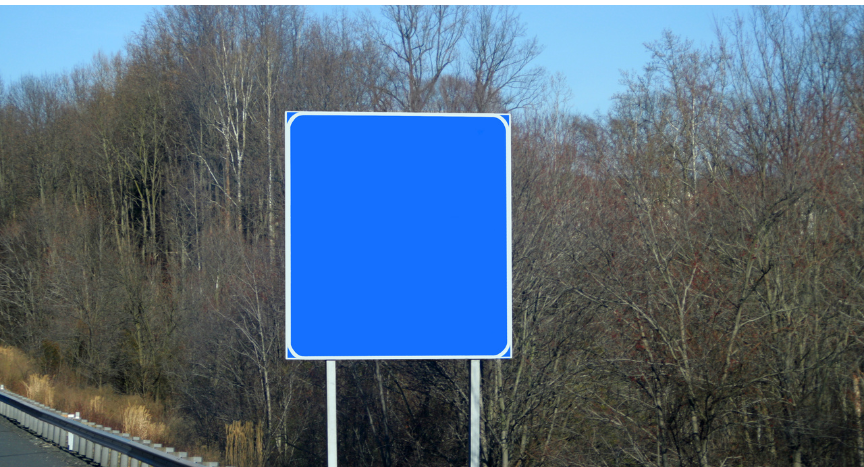
Every interstate exit tells a small story before it comes into view. Long before a driver reaches the ramp, a blue sign identifies which truck stops, fuel stations, restaurants, hotels, and other services are available nearby. The signs have become such a familiar part of highway travel that most people never stop to consider why certain businesses appear while others, sometimes located just down the same road, do not.
The answer has little to do with advertising and much more to do with a structured program that has been in place for decades.
Blue Service Signs Are Part of a National Traffic Control System
The blue signs found along interstate highways are officially known as Specific Service Signs. Unlike billboards, they are classified as traffic control devices under the Federal Highway Administration’s Manual on Uniform Traffic Control Devices, commonly known as the MUTCD.
Federal standards establish how the signs are designed and where they may be used, while each state’s department of transportation oversees participation within its own highway system. This shared responsibility keeps the signs recognizable from state to state, even though application procedures and administrative requirements are handled locally.
Location Is Only One Part of the Process
Businesses located near an interstate interchange are not automatically eligible to appear on a blue service sign. Each state establishes participation requirements that businesses must satisfy before an application is approved.
Travel centers and truck stops typically must provide fuel, maintain public restrooms, operate during required business hours, and remain within a specified distance of the interchange. Transportation agencies also consider whether the location can be reached safely and efficiently after leaving the interstate. A business may sit close to an exit but still fall outside the program if access requires an indirect route or exceeds the state’s allowable distance.
Space Along the Interstate Is Limited
Even qualified businesses are not guaranteed a place on a blue sign. Federal design standards limit the number of logo panels that may be displayed at an interchange because highway signs must remain readable at interstate speeds. Once every available panel has been assigned, additional businesses often wait until space becomes available through roadway improvements or changes in program participation.
That limitation explains why two truck stops at the same exit may not receive the same level of visibility despite offering similar services.
Participation Comes with Ongoing Costs
The program is often mistaken for free promotion provided by state transportation agencies, but participating businesses are responsible for the costs associated with their logo panels.
Application fees, fabrication, installation, inspections, maintenance, and replacement costs are generally paid by participating businesses, although the exact fee structure varies from state to state. Those fees support the operation of the program rather than functioning as commercial advertising revenue.
Businesses are also expected to continue meeting program requirements after installation. Locations that close, discontinue required services, or withdraw from the program may have their logo panels removed.
Why National Chains Often Appear More Frequently
Large travel center brands are commonly represented because they operate qualifying locations across numerous interstate corridors and routinely participate in state signage programs.
Independent truck stops are evaluated under the same eligibility standards. Many appear on blue service signs throughout the country, while others choose not to participate or encounter interchanges where every available logo panel has already been assigned. Visibility on a blue sign reflects participation in the program rather than company size alone.
A Familiar System That Continues to Adapt
Digital navigation has changed how travelers locate nearby services, but blue service signs continue to provide immediate information without requiring a mobile device or in-vehicle navigation system. Their standardized design allows essential services to be identified with a glance while reducing unnecessary roadside distractions.
Although charging stations for electric vehicles and other emerging services are beginning to appear within some state programs, the purpose of the signs remains unchanged. They continue to provide a consistent way to identify essential services located near interstate exits using standards that have guided highway travel for generations.
Frequently Asked Questions
Why are interstate service signs blue instead of green?
The Manual on Uniform Traffic Control Devices assigns specific colors to different types of highway signs. Blue is reserved for traveler services, while green signs are generally used for directional guidance and destinations.
Can one business have its logo displayed at more than one interstate exit?
Yes. Businesses with multiple qualifying locations may participate at each eligible interchange, provided every location independently meets the state’s requirements and space is available.
Who manufactures and installs blue highway service signs?
Many state transportation agencies contract with private companies that manage applications, fabricate logo panels, install new signs, replace damaged panels, and perform routine maintenance under state oversight.
Are blue service signs used only on interstate highways?
No. While they are most commonly associated with the Interstate Highway System, many states also use the program on selected freeways and other limited access highways where it meets federal and state guidelines.