

Most semi truck batteries remain reliable for three to five years, but no calendar date tells you exactly when it’s time for a replacement. A battery that spends most of its life on long highway runs may outlast one that’s exposed to extreme heat, frequent stop-and-go driving, or long periods of inactivity. That’s why two trucks built the same year can have very different battery life.
Waiting until the truck won’t start is rarely the first indication that something is wrong. In many cases, the electrical system begins showing smaller warning signs weeks or even months beforehand.
Why Some Truck Batteries Wear Out Faster Than Others
Temperature has a greater effect on battery life than many drivers realize. While cold weather often exposes a weak battery, excessive heat is usually what shortens its lifespan. Fleets operating in states such as Arizona, Nevada, Florida, and Texas often replace batteries more frequently because prolonged heat accelerates internal deterioration.
The truck itself also influences battery life. Sleeper trucks that regularly power refrigerators, bunk heaters, inverters, or other accessories place a heavier demand on the batteries than trucks with fewer electrical loads. Those accessories are part of normal operation, but repeated deep discharges without enough charging time can gradually reduce battery capacity.
Maintenance can make just as much of a difference. Corroded terminals, loose cables, poor grounds, or a charging system that’s no longer performing properly force batteries to work harder every time the engine starts. In many cases, what appears to be a bad battery turns out to be an alternator or charging system problem.
Signs a Battery Is Near the End of Its Service Life
A battery usually loses performance gradually rather than failing without warning.
Drivers commonly notice the engine turning over more slowly during startup, especially after the truck has been parked overnight. Headlights may appear dimmer before the engine starts, voltage readings may become inconsistent during inspections, or the truck may need a jump start after sitting for a relatively short time.
Corrosion around the battery terminals should also be taken seriously. Although cleaning the terminals may restore a good electrical connection, excessive corrosion can also point to charging problems that deserve additional inspection.
Getting More Life Out of Your Batteries
Battery maintenance doesn’t require much time, but skipping it can become expensive.
Checking cable connections during routine inspections helps ensure the batteries can charge and deliver power efficiently. Battery hold downs should also remain tight because excessive vibration can damage the internal plates long before the outside of the battery shows visible wear.
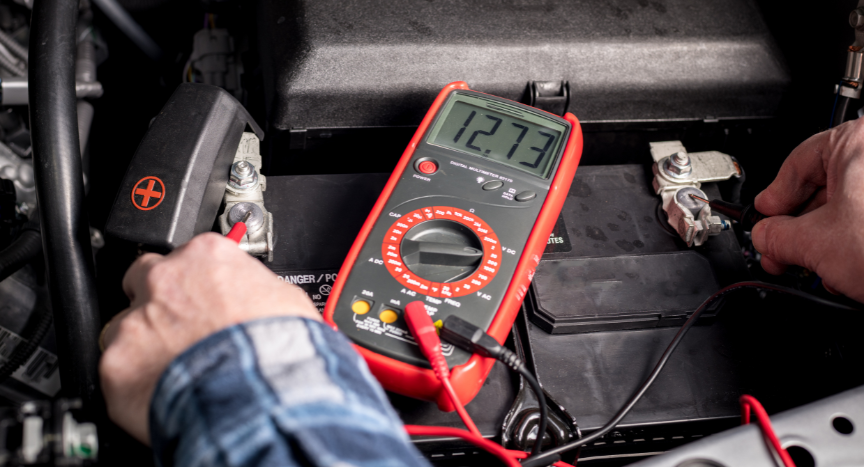
Load testing provides information that a simple voltage reading cannot. A battery may show normal voltage with no load applied but still fail when it’s asked to deliver the current needed to start a diesel engine. Including load testing as part of scheduled preventive maintenance can help identify weak batteries before they become a roadside problem.
If the truck will be parked for several weeks, following the manufacturer’s storage recommendations helps reduce unnecessary battery discharge. Allowing batteries to remain in a low state of charge for extended periods can permanently reduce their capacity.
Replacing One Battery or the Entire Set
Most heavy-duty trucks use batteries that are designed to work together. Installing one new battery alongside older batteries can create an imbalance because each battery charges and discharges differently as it ages.
For that reason, many fleets replace batteries as a matched set once they reach the end of their expected service life. Although the upfront cost is higher, replacing the complete set often reduces the likelihood of another battery failure a short time later.
Frequently Asked Questions
How often should battery terminals be cleaned?
Battery terminals should be inspected during routine preventive maintenance and cleaned whenever corrosion begins to build up. Keeping the connections clean helps maintain proper charging and starting performance.
Does idling fully recharge semi truck batteries?
Not always. While idling allows the alternator to recharge the batteries, highway driving generally provides more consistent charging output. Batteries that have been deeply discharged may require additional charging time.
Can a bad battery damage the alternator?
A weak or failing battery can place additional demand on the charging system because the alternator must work harder to keep the battery charged. Over time, that extra workload may contribute to premature alternator wear.
Are AGM batteries better than flooded batteries for semi trucks?
Both battery types are used in commercial trucks. The best choice depends on the truck manufacturer’s specifications, operating conditions, and the electrical demands placed on the vehicle.
Is battery testing part of preventive maintenance?
Yes. Many fleets include battery inspections and load testing during scheduled preventive maintenance because identifying a weak battery early is usually less expensive than dealing with an unexpected breakdown.