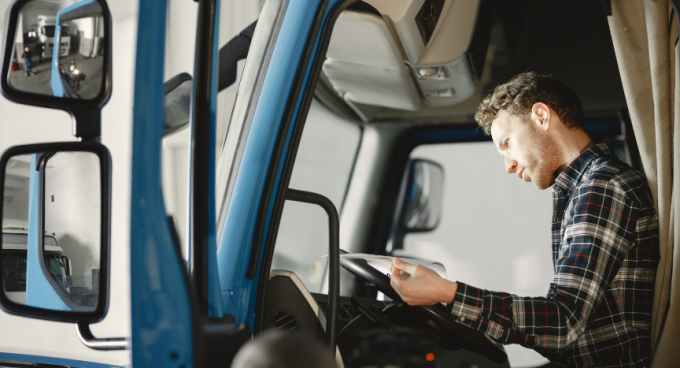


Most truck driving jobs have a familiar set of requirements: the right CDL, a safe driving record, and experience with the equipment being used. But there are opportunities outside traditional freight hauling where employers need more than someone who can operate a commercial vehicle. The work might involve running specialized equipment at a construction site, transferring materials at an industrial facility, or entering a secure port terminal.
For drivers interested in changing careers without leaving the industry, these positions are worth understanding. Some build on skills gained through years of trucking, while others are better suited to people who also have experience in construction, maintenance, or industrial operations. The important distinction is what the employer expects someone to do beyond driving.
Specialized Equipment Operators
Some of the clearest opportunities are with companies that use commercial trucks as working equipment. Hydrovac and industrial vacuum trucks are two examples, and although both use vacuum systems, their purposes and operating requirements are different.
Hydrovac trucks use pressurized water to loosen soil and vacuum equipment to remove it. They’re commonly used on construction and utility projects where crews need to expose underground infrastructure. The operator is responsible for positioning the truck, running the excavation equipment, and coordinating the work at the site.
Industrial vacuum trucks are used to remove liquids, sludge, and other materials from tanks, pits, and industrial facilities. Operators handle hoses and collection equipment, monitor the process, and follow procedures appropriate to the material being removed.
These aren’t positions where the driving ends and someone else necessarily takes over. The person operating the truck may also be responsible for the equipment throughout the job.
The CDL requirement depends on the vehicle, with many straight trucks requiring Class B and certain combination vehicles requiring Class A. Employers may provide training on the equipment, but some positions call for previous experience in excavation, industrial cleaning, or machinery operation.
Drivers looking into these jobs will generally find them advertised as hydrovac operator, vacuum truck operator, or industrial cleaning operator. Those titles are more useful than searching only for conventional trucking openings.
Industrial Tanker Positions
Drivers who already have tanker experience may find another route into specialized work through industrial transportation. In certain operations, the job includes transferring material rather than simply arriving with a loaded trailer and waiting for it to be unloaded.
That can mean connecting hoses, operating pumps, monitoring gauges, or following transfer procedures at a customer facility. The exact responsibilities depend on the equipment and material involved, so two jobs requiring the same CDL endorsement can involve very different work.
The tank vehicle endorsement covers the knowledge required to operate qualifying tank vehicles safely. It doesn’t certify a driver to operate every industrial pump or transfer system. The federal tank vehicle endorsement requirements address vehicle characteristics and handling rather than every piece of equipment used during loading or unloading.
For someone who has worked around pumps or industrial machinery, that experience may be relevant when applying. Others may need employer-provided instruction before performing transfers independently.
The best way to evaluate these positions is to read beyond the license requirements. A job posting that includes equipment operation or product transfer responsibilities is describing a different role from one focused primarily on transportation.
Port Trucking and TWIC Requirements
Not every additional qualification involves learning to operate machinery. Port trucking is an example where a driver may need a credential simply to access the location where the work takes place.
Marine terminals operate under federal security requirements, and drivers who need unescorted access to secure areas of regulated facilities generally must have a Transportation Worker Identification Credential, or TWIC.
The Transportation Security Administration issues the credential after identity verification and a security threat assessment. A TWIC doesn’t replace a CDL, but it allows eligible workers to enter certain secure maritime areas without an escort.
This requirement doesn’t apply to every container-hauling job. Drivers working between inland warehouses may never need the credential, while those regularly entering secure marine terminals may be required to obtain it before starting.
Applicants can find enrollment information through the TSA’s TWIC program. For someone considering port drayage, checking the terminal access requirements before applying can help determine whether obtaining the credential is necessary.
Federal Motor Vehicle Operator Jobs
Drivers who want to continue operating commercial vehicles without working for a traditional carrier can also consider civilian positions with federal agencies. Military installations and other government facilities employ motor vehicle operators to transport equipment, supplies, and materials.
These jobs fall under the federal Motor Vehicle Operator occupational series, 5703. The Office of Personnel Management describes positions involving several types of vehicles, including heavy trucks and tractor-trailers.
The work itself may be familiar, but the application process differs from private-sector hiring. Federal announcements identify the required experience, who is eligible to apply, and any background investigation or other employment conditions.
Some positions are open to the general public, while others have restrictions based on federal hiring eligibility. Working at a military installation doesn’t automatically require military service, but applicants must meet the conditions listed for that particular opening.
Drivers can search USAJOBS for Motor Vehicle Operator positions. Reviewing the assigned vehicle types and qualifications is important because not every opening requires a Class A CDL.
Commercial Driving Combined with Mechanical Work
Another possibility for drivers with a mechanical background is mobile equipment service. Industrial businesses use service trucks to bring technicians, tools, and replacement parts to customer locations where machinery needs maintenance or repair.
The employee may drive the vehicle to a jobsite and then perform technical work on engines, hydraulic systems, or other equipment. In these positions, commercial driving is part of the job, but mechanical knowledge is often the more specialized qualification.
Not every service truck requires a CDL. Some employers use vehicles below commercial licensing thresholds, while others operate larger trucks that require commercial driving credentials.
Job titles such as mobile equipment technician, field service technician, and service truck operator can help narrow a search. Applicants should check both the vehicle requirements and the technical experience expected, since these positions aren’t interchangeable.
A driver who previously worked as a mechanic or maintained heavy equipment may have a useful combination of qualifications. Someone without that experience would need to look for an employer offering the appropriate technical training.
Choosing a Specialized Position
The opportunities that make the most sense depend on what a driver already knows how to do. Someone with construction experience may be better prepared for hydrovac work, while a driver familiar with pumps and industrial facilities might be interested in tanker or vacuum truck operations.
Port trucking and federal driving positions present different considerations. The additional requirements are more closely tied to facility access or employment eligibility than to operating machinery.
Before pursuing a credential or training program, it’s worth checking actual job openings to see which qualifications employers require at hiring and which they provide training for. That can prevent spending money on something that isn’t needed for the positions available.
A CDL remains the starting point for these careers, but it isn’t always the qualification that determines who gets hired. Understanding the work beyond the driver’s seat is what helps narrow the search to positions that genuinely match a driver’s experience.
The TDUSA editorial team creates practical, driver-focused content covering trucking news, industry updates, safety, regulations, and career information for professional truck drivers across the United States. Each article is built to reflect real-world experience, industry developments, and information drivers can use on and off the road.
Last Updated: October 23, 2026