

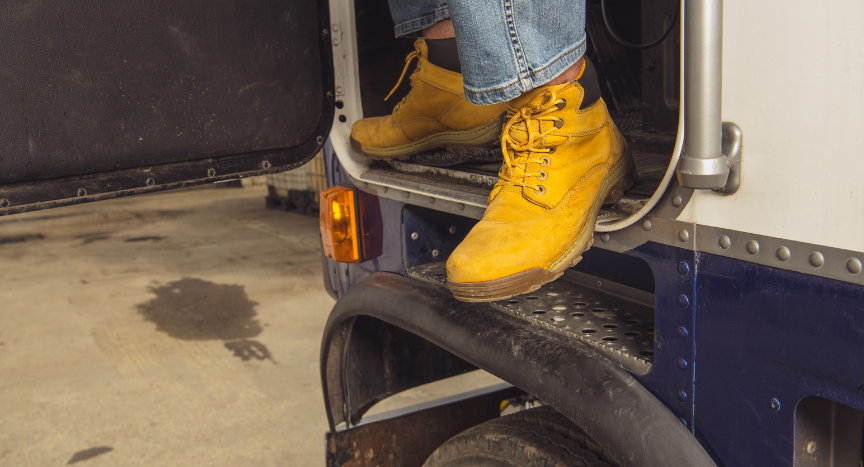
Long hours behind the wheel call for comfortable footwear, but the demands don’t end when the truck stops. Walking through terminals, securing freight, and working in wet or uneven yards can require more protection than an ordinary pair of shoes provides.
Today’s work boots range from lightweight safety-toe sneakers to waterproof leather designs built for outdoor work. The differences in weight, fit, and construction are worth considering, particularly for drivers who spend considerable time outside the cab.
Work Boots Worth Considering for Long-Haul Trucking
These five models offer different combinations of comfort, protection and weather resistance.
|
Work boot |
Key features |
Best suited for |
| Timberland PRO Powertrain Sport Alloy Toe | Lightweight athletic-style construction, alloy safety toe, cushioned footbed and slip-resistant outsole | Drivers who prefer flexible, less bulky footwear |
| Red Wing King Toe 2243 | Waterproof leather, nonmetallic safety toe, extra toe room and six-inch coverage | Drivers who want a roomier traditional work boot |
| Ariat WorkHog Waterproof Composite Toe | Waterproof leather, composite safety toe, pull-on construction and oil- and slip-resistant outsole | Outdoor freight handling and frequent work in yards |
| KEEN Utility Lansing Mid Waterproof | Waterproof construction, steel safety toe, slip-resistant outsole and reflective details | Work in wet yards and industrial facilities |
| Wolverine Overpass 6-Inch Composite Toe | Waterproof leather, composite safety toe, flexible construction and cushioned footbed | Drivers seeking a flexible, conventional work boot |
These examples cover several footwear styles rather than ranking one manufacturer above another. Published specifications can establish protective features and construction, but comfort ultimately depends on fit.
Matching Footwear to the Job
The amount of work performed outside the truck can help narrow the options. Drivers handling flatbed freight may spend considerable time securing loads and walking on uneven surfaces, while some dry van operations involve little more than entering terminals and checking equipment.
Lightweight designs such as the Timberland PRO Powertrain Sport may appeal to those who prefer an athletic-style shoe. For more demanding outdoor work, taller boots offer additional coverage, while waterproof construction becomes useful in wet conditions.
Protective requirements also vary. OSHA requires appropriate footwear where hazards include falling or rolling objects or materials that could puncture the sole. Customer facilities may have additional requirements, so those should be confirmed before purchasing.
Waterproofing, Insulation and Traction
Waterproofing keeps external moisture from entering a boot, but it doesn’t provide the warmth of insulation. Drivers regularly working in freezing temperatures may need insulated footwear, while those traveling through warmer regions may prefer an uninsulated design.
Traction is another consideration. Slip-resistant outsoles are designed for particular surfaces and conditions, and performance on wet concrete does not necessarily translate to reliable grip on ice or loose gravel.
For routes that cross different climates, separate warm-weather and winter footwear may be more practical than relying on one pair throughout the year.
Getting the Right Fit
A boot’s cushioning won’t compensate for poor sizing. The American Podiatric Medical Association recommends footwear with a firm heel counter, stability through the middle, and flexibility near the toes.
Trying boots on later in the day, when feet may be more swollen, can provide a better indication of fit. Work socks should also be worn during fitting, particularly when considering insulated footwear.
Safety-toe boots need enough room around the toes because the protective cap will not stretch. The heel should remain secure while walking, without excessive rubbing or movement.
For drivers using orthotic inserts, removable footbeds can provide flexibility, although the replacement insert must not make the boot too tight.
Durability and Long-Term Value
Price alone doesn’t determine whether a work boot is a good investment. Outsole wear, construction, and repair options affect how long footwear remains useful.
Some boots can be resoled, while others require replacement once the outsole wears out. Checking this before purchasing can be worthwhile for drivers who spend substantial time walking on abrasive surfaces.
Regular cleaning and proper drying help maintain leather and waterproof materials. Worn tread, separating soles, or damage to protective components should also be addressed rather than relying on the appearance of the upper.
A comfortable, well-fitting boot that meets the demands of the job will generally provide better value than one purchased solely for its brand name or advertised features.
Frequently Asked Questions
Are composite-toe boots lighter than steel-toe boots?
Composite toe caps can be lighter than steel, but overall boot weight also depends on the materials used in the upper, sole, and insulation. Comparing the weight of specific models provides a more accurate answer.
Can truck drivers wear athletic shoes instead of work boots?
Athletic shoes may be appropriate when protective footwear isn’t required. However, certain workplaces require safety-toe shoes or other protective features. Athletic-style safety footwear can offer an alternative to traditional boots.
Are pull-on boots better than lace-up boots?
Neither style is universally better. Lace-up boots allow more adjustment around the foot and ankle, while pull-on boots offer convenience. The choice depends on fit, work conditions, and personal preference.
How often should work boots be replaced?
Replacement depends on use and condition rather than a fixed schedule. Worn tread, separating soles, damaged uppers, or compromised protective components are signs that footwear should be evaluated for replacement.
The TDUSA editorial team creates practical, driver-focused content covering trucking news, industry updates, safety, regulations, and career information for professional truck drivers across the United States. Each article is built to reflect real-world experience, industry developments, and information drivers can use on and off the road.
Last Updated: November 16, 2026