

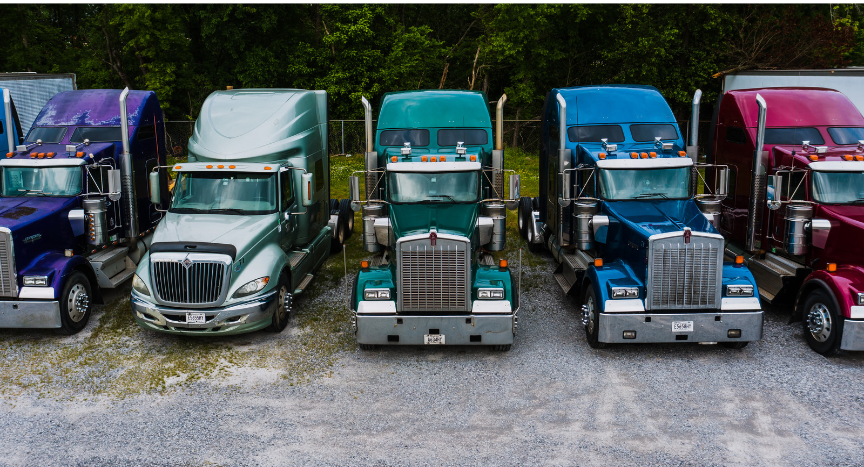
The International LT has been a familiar sight on American highways for years. Mack’s Pioneer, introduced in 2025, is a much newer arrival, replacing the Anthem as the company’s flagship highway tractor. Although both models compete in the Class 8 market, they take noticeably different approaches to cab design, powertrain selection, and sleeper accommodations.
The Pioneer is the more substantial departure from its predecessor. Mack developed a new cab around the truck, rather than updating the Anthem’s existing design. International has continued refining the LT, including the introduction of its S13 Integrated Powertrain, without abandoning the model’s established layout.
Mack Pioneer and International LT Specifications
| Specification | Mack Pioneer | International LT |
| Engine | Mack MP13 | International S13 or Cummins X15 |
| Maximum horsepower | 540 hp | 565 hp |
| Maximum torque | 1,950 lb-ft | 2,050 lb-ft |
| Transmission | Mack mDRIVE | International T14 and other compatible transmissions |
| Sleeper lengths | 44, 64 and 76 inches | 56 and 73 inches |
| Cab configurations | Day cab and sleeper | Day cab and sleeper |
Figures represent available configurations. Equipment and ratings vary by specification.
Inside the Cab
The Pioneer’s interior is where Mack’s redesign is most apparent. The cab is wider than the Anthem’s, with a one-piece windshield and a dashboard built around a 12-inch CoPilot display. The new layout gives the driver more shoulder room and changes the placement of several frequently used controls.
Mack also offers a digital mirror system that replaces traditional exterior mirrors with cameras. Images appear on screens inside the cab, giving the Pioneer a distinctly different setup from trucks equipped with conventional mirrors.
International has retained a more familiar arrangement in the LT. Its instrument cluster is configurable, but the surrounding dashboard still relies on physical switches positioned within reach of the driver. The hood slopes downward toward the front, and conventional exterior mirrors provide the side views.
Neither layout is inherently better. A driver moving from an older highway tractor may find the LT’s controls more familiar, while the Pioneer’s redesigned cab introduces equipment that has become increasingly common in newer commercial vehicles.
What’s Under the Hood?
Mack’s MP13 engine powers the Pioneer, with available ratings reaching 540 horsepower and 1,950 lb-ft of torque. It works with the company’s mDRIVE automated manual transmission, offered in several configurations.
The LT has a wider engine selection. International’s S13 produces up to 515 horsepower and 1,850 lb-ft of torque, while the Cummins X15 is available with ratings reaching 565 horsepower and 2,050 lb-ft.
There is also a difference in transmission choice. International pairs the S13 with its 14-speed T14 automated manual, but compatible LT configurations can be ordered with other transmissions, including conventional manuals.
That distinction may matter more than the difference in peak horsepower. The LT accommodates drivers and fleets with different powertrain preferences, while Mack has centered the Pioneer around its own engine and automated transmission.
Living Space Behind the Seats
Mack offers the Pioneer with three sleeper lengths, topping out at 76 inches. The largest high-roof version provides up to 98 inches of standing height, and the new cab includes additional storage space compared with the Anthem.
The International LT’s largest sleeper measures 73 inches. Its Sky-Rise configuration includes an available upper bunk that folds out of the way when it isn’t needed, leaving more room inside the sleeper during the day.
Mack’s available integrated parking cooler is another feature worth noting. It provides cooling while the truck is parked, without relying solely on the main cab air-conditioning system.
The LT offers several interior trim packages, including Classic, Diamond and Diamond Elite. Cabinet layouts, materials and other details vary depending on the selected configuration.
Three inches separate the largest published sleeper lengths, but the difference in usable space is not that straightforward. The placement of bunks, cabinets, and storage areas has a considerable effect on how much room remains for moving around.
Steering and Everyday Comfort
The Pioneer can be equipped with Mack’s Command Steer system, which uses active steering assistance to reduce the effort needed at the wheel. The cab also offers heated, ventilated, and massaging seats, along with standard automatic climate control.
International provides adjustable seating and available automatic temperature control in the LT. S13-equipped models use a column-mounted shifter, freeing up space around the driver’s seat and dashboard.
Both manufacturers offer comfort equipment suited to extended trips, but a specification sheet does not reveal how a seat supports a driver after several hundred miles. The same applies to steering feel and cab noise. Those differences become clearer during actual driving than they do in published equipment descriptions.
Fuel Economy and Safety Equipment
Mack reports that the Pioneer can achieve up to 11% better fuel efficiency than its previous highway models. The company attributes the improvement to changes in aerodynamics and powertrain design.
International has published fuel-economy improvements for the LT with its S13 Integrated Powertrain, based on testing against selected competing highway tractors. Because the manufacturers used different comparison vehicles and test conditions, the published percentages cannot be used to rank the two trucks directly.
The Pioneer includes Mack Protect, with collision warning and automatic emergency braking functions. International offers Bendix Wingman Fusion on the LT, with available features including adaptive cruise control, lane departure warnings, and collision mitigation.
The specific safety equipment depends on how each truck is configured, particularly when comparing standard and optional systems.
Where the Two Trucks Stand Apart
The Pioneer is Mack’s answer to a changing highway truck market. Its new cab provides more interior room than the Anthem, while available digital mirrors, Command Steer, and an integrated parking cooler bring additional technology into the driver’s workspace.
International’s LT continues to offer more powertrain variety. The S13 and Cummins X15 provide different engine choices, and the availability of conventional manual transmissions gives the LT an option not listed for the Pioneer.
The sleeper comparison is closer. Mack offers a slightly longer maximum configuration, while International provides a fold-up bunk arrangement and multiple interior packages. The differences in storage and floor space are worth examining alongside the published dimensions.
For drivers comparing these models, the most useful starting point is the equipment fitted to each truck. An LT with the S13 and a 73-inch sleeper is a different proposition from one equipped with the Cummins X15, just as a fully equipped Pioneer differs from a more basic configuration.
Frequently Asked Questions
When did Mack begin producing the Pioneer?
Production began in August 2025 at Mack’s Lehigh Valley Operations facility in Macungie, Pennsylvania.
Is a conventional manual transmission available in the International LT?
Yes. International offers conventional manual transmissions with compatible LT configurations. The S13 Integrated Powertrain uses the T14 automated manual.
Can both models be ordered as day cabs?
Yes. The Mack Pioneer and International LT are available in day cab and sleeper configurations.
Which truck has a better reliability record?
There is not enough comparable long-term service data in the manufacturers’ published specifications to establish a reliability advantage between the models.
The TDUSA editorial team creates practical, driver-focused content covering trucking news, industry updates, safety, regulations, and career information for professional truck drivers across the United States. Each article is built to reflect real-world experience, industry developments, and information drivers can use on and off the road.
Last Updated: November 18, 2026