

Aurora Innovation is making waves in autonomous trucking by validating a 1,000-mile driverless route that goes beyond federal hours-of-service (HOS) limits. The company also announced plans to have more than 200 self-driving trucks on the road by the end of 2026, expanding its presence across the southern United States.
Tripling Its Driverless Network
The Pittsburgh-based company said it has tripled its driverless trucking network to 10 routes. Aurora’s latest software update allows its Aurora Driver autonomous control system to handle longer lanes, reach customer endpoints directly, and navigate a wider range of adverse weather conditions.
“As expanding across the Sun Belt and introducing customer endpoints enables us to provide our customers with the capacity they need to move goods at a scale that wasn’t possible before,” said Chris Urmson, co-founder and CEO of Aurora. “Being a carrier is a game of margins, and if autonomy can work around the clock, it will be key to growing our customers’ businesses.”
Driverless Lanes Across the Sun Belt
Aurora now operates driverless freight lanes on key southern corridors, including:
- Dallas to Houston
- Fort Worth to El Paso
- El Paso to Phoenix
- Fort Worth to Phoenix
- Dallas to Laredo
The new Fort Worth to Phoenix route, approximately 1,000 miles, exceeds current HOS limits for a single driver. Aurora says operating without mandatory rest breaks allows the Aurora Driver to reduce transit times and increase equipment utilization.
Early Customers and Miles Logged
Companies like Hirschbach Motor Lines are already testing the Fort Worth–Phoenix lane, supporting long-haul freight. Aurora reports more than 250,000 driverless miles as of January 2026 with zero Aurora Driver-attributed collisions.
Aurora is also expanding supervised autonomous deliveries to customer facilities, including:
- Hirschbach Motor Lines – Dallas to Laredo for Driscoll’s
- Detmar Logistics – Midland to Capital Sand’s mining site in Monahans, Texas
- A Phoenix-based facility for one of the largest U.S. carriers
Weather Handling Improvements
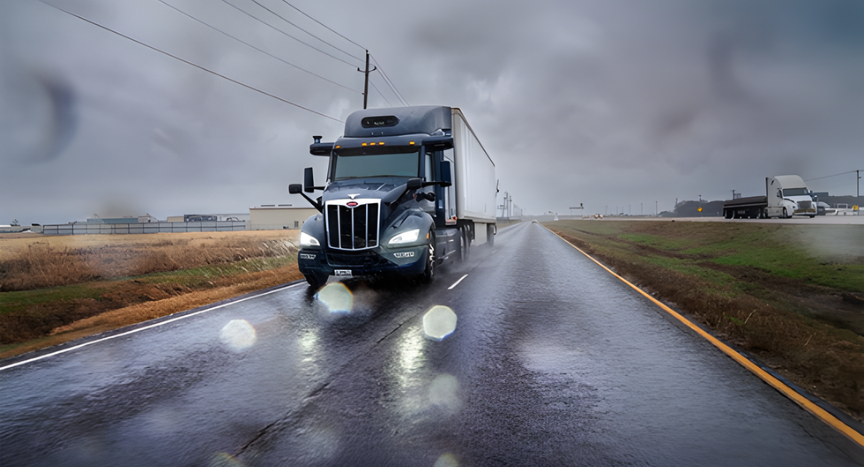
The new software update allows Aurora Driver to operate in challenging conditions such as rain, fog, and heavy winds. Aurora noted that weather previously limited driverless operations in Texas about 40% of the time, and this update is expected to boost uptime and vehicle utilization across the varied Sun Belt climate.
Scaling Toward 200+ Trucks
Aurora plans to launch its next-generation hardware kit on the International LT Series platform in Q2 2026, operating without a ride observer. The company expects over 200 autonomous trucks on the road by year-end and reports that commercial truck capacity is fully booked through Q3 2026, highlighting rising demand for autonomous freight.
What This Means for Truck Drivers
While Aurora continues to expand driverless operations, the technology is currently supplementing traditional trucking rather than replacing it entirely. Human drivers remain critical for route supervision, maintenance, and customer interactions, particularly on complex delivery runs.
Source: Trucking Info