CDL Classes and Endorsements Explained (Class A, B, C, H, N, P, S, T, X)
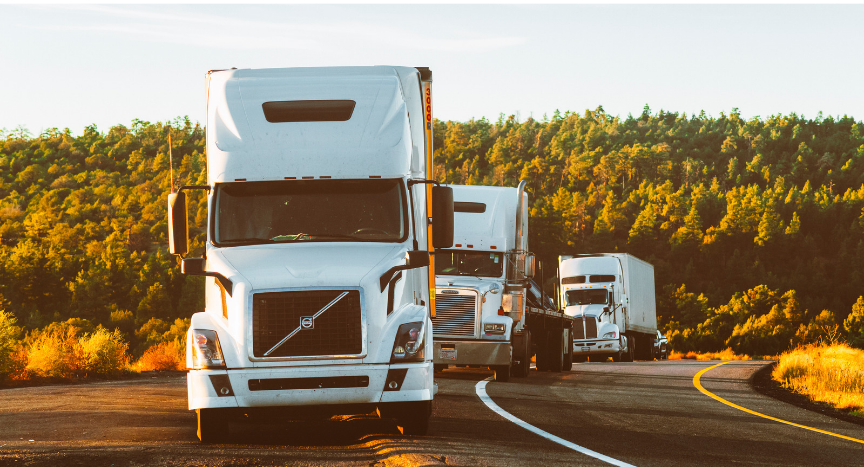
Quick answer: A commercial driver’s license (CDL) comes in three classes. Class A covers heavy vehicle combinations, including most tractor-trailers. Class B covers heavy single vehicles, including many straight trucks, dump trucks and buses. Class C covers smaller vehicles that require a CDL because of their passenger capacity or hazardous cargo. Your endorsements authorize certain types of work, while restrictions limit which vehicles you can operate.
Last updated: November 3, 2026. This guide explains the federal baseline. Confirm application requirements, fees and any additional rules with your state driver licensing agency.
What is the difference between a CDL class and an endorsement?
Your CDL class identifies the vehicle category you qualify to drive. An endorsement adds permission to operate certain vehicles or transport particular cargo.
For example, a driver hauling gasoline in a tractor-trailer generally needs a Class A CDL with an X endorsement, which combines tank vehicle and hazardous materials qualifications. A driver operating a large school bus generally needs a Class B CDL with P and S endorsements.
The license class and endorsements work together. Having the correct class alone does not qualify you for every job using that vehicle.
What are the three CDL classes?
| CDL class | Federal vehicle category | Common examples |
|---|---|---|
| Class A | A combination with a combined weight or weight rating of at least 26,001 pounds, with a towed vehicle exceeding 10,000 pounds. | Tractor-trailers and qualifying heavy truck-and-trailer combinations |
| Class B | A single vehicle weighing or rated at 26,001 pounds or more, including one towing a vehicle of 10,000 pounds or less. | Heavy straight trucks, dump trucks and large buses |
| Class C | A vehicle outside Classes A and B that is designed for 16 or more people, including the driver, or transports qualifying hazardous materials. | Smaller passenger buses and smaller vehicles carrying regulated hazmat |
For the federal CDL definition, actual weight or the manufacturer’s weight rating can determine the category; operating below the rated capacity does not automatically remove the CDL requirement. Hazardous materials include loads requiring placards and certain listed select agents or toxins.
What is a Class A CDL used for?
A Class A CDL is the usual choice for tractor-trailer work. That includes dry van, refrigerated, flatbed and many tanker positions.
It can support local, regional or over-the-road work. The vehicle combination determines the license class—not how far you drive.
Class A holders may also operate Class B and C vehicles when they have the necessary endorsements and no restriction preventing that operation.
What is a Class B CDL used for?
A Class B CDL covers heavy single vehicles. Examples include qualifying box trucks, concrete mixers, garbage trucks and buses.
It can be a suitable starting point for drivers interested in construction, sanitation, passenger transportation or straight-truck delivery. However, vehicle specifications matter: a truck-and-trailer combination may require Class A even when the truck resembles equipment used in Class B work.
What is a Class C CDL used for?
Class C addresses passenger or hazardous materials operations in vehicles that fall below the Class A and B categories.
For example, a smaller shuttle designed for 16 people, including its driver, may require Class C with a passenger endorsement. A smaller vehicle transporting placard-required hazardous materials may require Class C with a hazmat endorsement.
Class C is not a general requirement for every small commercial truck or delivery van.
What do GVWR and GCWR mean?
These terms describe weight ratings, which are different from what a vehicle happens to weigh on a particular trip.
- GVWR — Gross Vehicle Weight Rating: The manufacturer’s maximum rated loaded weight for an individual vehicle.
- GCWR — Gross Combination Weight Rating: The rated loaded weight for a combination, such as a truck and trailer.
- Actual weight: What the vehicle or combination weighs at the time, including its load.
An empty vehicle can still require a CDL based on its rating. Check the truck and trailer specifications before deciding which license you need.
What are CDL endorsements?
| Code | Endorsement | What it authorizes | Federal endorsement tests |
|---|---|---|---|
| H | Hazardous materials | Transporting hazardous materials covered by CDL hazmat requirements | Knowledge |
| N | Tank vehicle | Operating a vehicle meeting the federal tank vehicle definition | Knowledge |
| P | Passenger | Operating qualifying passenger vehicles | Knowledge and skills |
| S | School bus | Operating school buses in qualifying student transportation | Knowledge and skills |
| T | Double/triple trailers | Operating double- or triple-trailer combinations where permitted | Knowledge |
| X | Tank vehicle and hazardous materials | Combining N and H qualifications | Tank and hazmat knowledge |
Endorsement testing is additional to the testing required for your CDL class.
H — Hazardous materials endorsement
The H endorsement is required for transporting hazardous materials covered by the federal CDL rules, including loads that require hazardous materials placards.
Depending on the material and quantity, examples can include fuel, industrial chemicals and explosives. A product being described as “hazardous” does not automatically mean every shipment requires an H endorsement.
First-time applicants must complete hazmat ELDT theory training before taking the knowledge test. Applicants must also meet TSA security threat assessment requirements.
N — Tank vehicle endorsement
The N endorsement applies to qualifying tanks carrying liquids or gases, including nonhazardous products such as milk or water.
The federal tank vehicle definition generally covers tanks with:
- An individual rated capacity of more than 119 gallons; and
- An aggregate rated capacity of 1,000 gallons or more.
The tanks may be permanently or temporarily attached. This means some loads of liquid-filled intermediate bulk containers, commonly called IBCs or totes, can trigger the requirement—even when transported on a conventional trailer.
For example, four attached 275-gallon liquid-filled totes have a combined rated capacity of 1,100 gallons and can meet the tank vehicle definition.
P — Passenger endorsement
The P endorsement is required for vehicles designed to transport 16 or more people, including the driver.
Examples include motorcoaches, transit buses and larger shuttle buses. The requirement is based on the vehicle’s designed capacity, rather than simply how many passengers are aboard on one trip.
Applicants must pass passenger knowledge and skills tests. First-time applicants must also complete the applicable ELDT.
S — School bus endorsement
Drivers transporting school students between home and school, or to and from school-sponsored events in a qualifying school bus, need both P and S endorsements.
School bus preparation includes student loading and unloading, railroad crossings, emergency procedures and use of school bus safety equipment.
States and school employers may impose additional screening, training or certification requirements. A school bus background check should therefore be explained as a state or employment requirement rather than treated as one uniform federal CDL endorsement test.
T — Double/triple trailers endorsement
The T endorsement qualifies drivers to operate double- or triple-trailer combinations, subject to applicable operating rules.
It requires a knowledge test. The endorsement does not make triple trailers legal on every road or in every state; the combination must also comply with route, size and permit requirements.
X — Combined tank and hazardous materials endorsement
The X endorsement combines the N tank vehicle and H hazardous materials qualifications.
It is commonly relevant to fuel hauling and other jobs transporting regulated hazardous liquids or gases in qualifying tank vehicles. Applicants must satisfy both sets of requirements, including applicable hazmat training and TSA screening.
What are CDL restrictions?
An endorsement adds a qualification. A restriction limits your driving privileges.
The equipment used for your skills test can affect the restrictions placed on your license.
| Restriction | What it means |
|---|---|
| E | You cannot operate commercial vehicles with a manual transmission. |
| L | You cannot operate commercial vehicles equipped with air brakes. |
| Z | You cannot operate commercial vehicles with full air brakes. |
| O | You cannot operate qualifying fifth-wheel tractor-trailer combinations. |
| M | You cannot operate Class A passenger vehicles. |
| N | You cannot operate Class A or B passenger vehicles. |
For example, passing the Class A test in an automatic vehicle can result in an E restriction. You would need to meet your state’s requirements to remove it before driving a manual commercial vehicle.
Air brakes are not a separate federal CDL endorsement. Air brake knowledge and skills testing determine whether an air brake restriction applies.
Letters can have different meanings depending on where they appear: N as an endorsement means tank vehicle; N as a restriction limits passenger vehicle operation.
Does entry-level driver training apply?
Federal entry-level driver training, or ELDT, generally applies when you:
- Obtain a Class A or Class B CDL for the first time.
- Upgrade from Class B to Class A.
- Obtain a P, S or H endorsement for the first time.
Class A, Class B, P and S training includes theory and behind-the-wheel instruction before the applicable skills test. H endorsement training is theory only and must be completed before the hazmat knowledge test.
Training must come from a provider listed on the FMCSA Training Provider Registry. Federal ELDT does not separately apply to adding an N or T endorsement. Obtaining X for the first time can trigger ELDT through its H component.
ELDT is not automatically required simply to renew an existing credential. Prior credentials and applicable exemptions can affect whether training is required.
How do I choose the right CDL?
Start with the work you want to do, then confirm the equipment and cargo requirements.
| Your goal | Common starting point |
|---|---|
| Drive a tractor-trailer hauling dry van, refrigerated or flatbed freight | Class A |
| Drive a qualifying heavy straight truck, garbage truck or concrete mixer | Class B |
| Haul nonhazardous liquids in a qualifying tanker | Appropriate CDL class plus N |
| Haul fuel in a tractor-trailer tanker | Class A plus X |
| Operate double-trailer combinations | Class A plus T |
| Drive a large transit bus or motorcoach | Usually Class B plus P |
| Drive a large school bus transporting students | Usually Class B plus P and S |
| Drive a smaller qualifying passenger shuttle | Class C plus P |
These are common examples. Confirm the vehicle specifications, endorsements and restrictions for the actual position before paying for training.
Browse current requirements in job listings at jobs.truckdriversus.com.
Frequently asked questions
Which CDL do I need to drive a semi truck?
A typical tractor-trailer requires a Class A CDL. Your cargo, trailer configuration and license restrictions determine whether you need additional qualifications.
Do local truck driving jobs require Class A?
Some do. A local tractor-trailer position requires Class A even if the driver returns home every day. Qualifying heavy straight-truck jobs generally require Class B.
Can I upgrade from Class B to Class A?
Yes. The upgrade generally requires applicable Class A ELDT, appropriate permit and knowledge testing, and a Class A skills test. Confirm the process with your state licensing agency.
Does a Class A CDL let me drive a bus?
Class A can cover the vehicle class, but you still need the appropriate passenger endorsement and must meet passenger vehicle testing requirements. School student transportation may also require S.
Do I need hazmat to haul water or milk?
Nonhazardous water or milk does not require H simply because it is a liquid. However, the vehicle may require an N endorsement if it meets the tank vehicle definition.
Do endorsements guarantee higher pay?
No. They can expand the jobs you qualify for, but pay depends on the employer, experience, location, schedule and work involved. Compare actual offers and qualification requirements.
Sources
- FMCSA: CDL Classes, Endorsements and Restrictions
- FMCSA: Entry-Level Driver Training
- FMCSA Training Provider Registry
- TSA: Hazardous Materials Endorsement
- Your state driver licensing agency’s current CDL manual