


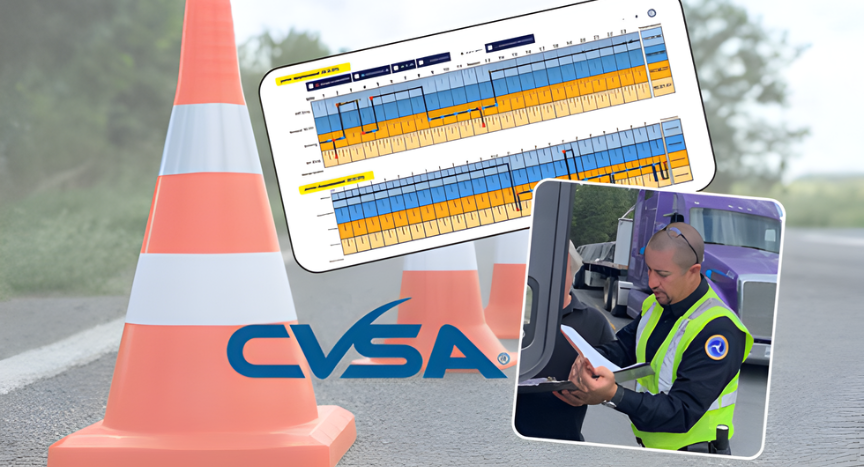
New inspection direction is now in place, addressing falsified records of duty status and electronic logging device manipulation. The update draws a clearer line between common logbook violations and situations where ELD data has been altered in ways that can trigger a mandatory 10-hour out-of-service order.
The guidance takes effect April 1 and arrives just ahead of the alliance’s annual CVSA International Roadcheck in May, where ELD compliance will receive added attention. At the same time, the Federal Motor Carrier Safety Administration has been increasing enforcement activity around fraudulent devices.
A Clearer Line Between Log Mistakes and Data Manipulation
Inspectors have long dealt with traditional hours-of-service violations. Misuse of personal conveyance or failure to log into an ELD typically leaves visible clues. If someone is over hours during an inspection, enforcement officials can often determine how much rest was taken and whether an out-of-service order is necessary.
The new bulletin focuses more heavily on situations where records of duty status have been reengineered, reprogrammed, or otherwise tampered with. These cases are more complex. When required data has been altered, it becomes significantly harder to determine whether someone should be allowed to continue operating.
How ELD Tampering Is Showing Up
The alliance highlights an example involving fraudulent use of credentials. In that case, a motor carrier created a fictitious ELD account using the same driver’s name but slightly altered credentials, such as changing a letter from uppercase to lowercase and modifying one digit in the CDL number.
The individual alternated between the two accounts after exceeding hours-of-service limits. Because this involved unauthorized alteration of the ELD system, it falls under tampering rather than a standard log violation.
Another example cited involved a driver recorded as off duty in Tolleson, Arizona, at 9 p.m. on Aug. 10, 2024. A fuel receipt later placed that same driver in Strafford, Missouri, on Aug. 11, more than 1,300 miles away. Additional review found the RODS had been shifted back three days, concealing nearly 21 hours of driving time.
In cases like these, altered logs may not show obvious edits in the event details. That forces inspectors to compare fuel receipts and other supporting documents against the ELD record to identify inconsistencies.
When a 10-Hour Out-of-Service Order Applies
According to the guidance, the objective is to remove from service only those who present an imminent hazard.
If an inspector can determine when the falsification occurred, and the individual is not over hours at the time of inspection, enforcement should proceed under § 395.8(e)(1), and the trip may continue.
If someone is over hours during inspection, however, an out-of-service order applies until eligibility is restored under hours-of-service rules.
More serious consequences come into play when records have been reengineered, reprogrammed, or tampered with in a way that prevents accurate retention of required data. When inspectors cannot determine when driving occurred, the guidance directs them to cite a § 395.8(e)(2) violation and issue a 10 consecutive hour out-of-service order.
Why This Matters: Heading into Roadcheck
With ELD compliance under the microscope during this year’s Roadcheck, documentation accuracy is no longer just about avoiding a citation. It can determine whether equipment keeps moving or sits for 10 hours on the shoulder or in a scale lot.
For operations managers, safety departments, and anyone responsible for compliance oversight, the distinction between log errors and system tampering is now clearly defined in enforcement policy. Supporting documents, credential controls, and internal auditing procedures will carry more weight than ever.
As inspections ramp up this spring, clean records and verifiable data will be the difference between a routine stop and a shutdown.
Source: Heavy Duty Trucking