

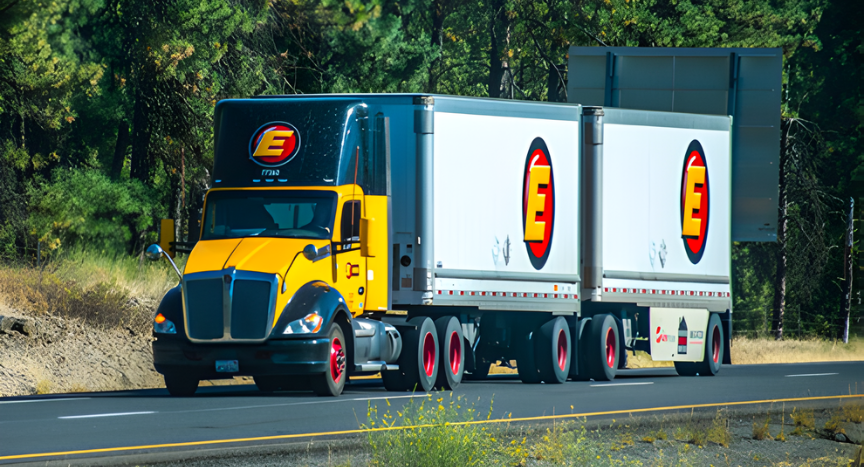
Estes Express Lines continued expanding its national footprint throughout 2025, opening new terminals, relocating existing facilities, and expanding capacity in key freight markets across the country. The privately owned carrier added four new terminals, relocated 12 others, and expanded four additional facilities, increasing total network capacity by 1,038 doors.
“These facilities expand the company’s presence in key markets and enhance its service and reliability nationwide,” Estes said. “Estes is North America’s largest privately owned freight carrier.”
Terminal Expansion Across Major Freight Markets
The network updates spanned coast to coast and included both urban freight hubs and regional distribution markets. Estes’ new, relocated, and expanded terminals in 2025 were located in:
- Honolulu, Hawaii
- South Bend, Indiana
- Olive Branch, Mississippi
- Iron Mountain, Michigan
- Eagan, Minnesota
- Portland, Oregon
- Bakersfield, California
- Rockford, Illinois
- Eugene, Oregon
- Tracy, California
- Miami, Florida
- Louisville, Kentucky
- Buffalo, New York
- Fort Wayne, Indiana
- Orange, California
- Hagerstown, Maryland
- Huntsville, Alabama
- St. Louis, Missouri
- Fargo, North Dakota
- Salt Lake City, Utah
- Phoenix, Arizona
Several of the upgraded terminals now rank among the largest in the Estes system. The Buffalo, New York, facility operates 171 doors, while the Tracy, California, terminal includes 167 doors. California accounted for three newly opened or relocated facilities in 2025, adding a combined 214 doors. Relocated terminals in South Bend, Eugene, Louisville, and Buffalo more than doubled their previous capacities.
Building for Long-Term Freight Demand
“Every new terminal represents progress — more capacity, more reliability, and more opportunities for our people and customers,” said Webb Estes, president and chief operating officer of Estes. “We’re building for the future of freight, ensuring our network can deliver the speed and dependability today’s supply chains demand.”
Alongside terminal expansion, Estes continued investing in fleet equipment to support the growing network. In 2025, the company added 1,170 tractors, 77 straight trucks, and 600 trailers, along with over 246,000 cargo straps, 365,900 airbags, and 54,000 load bars.
Technology Investments Improve Network Efficiency
Estes also emphasized technology upgrades as part of its broader growth strategy. “Estes’ ongoing investments in technology also delivered value in 2025 by lowering overhead operational costs and rendering the best service at the best price,” the company said.
Those investments resulted in reduced shipment handling, fewer returns, fewer miles between stops, improved fleet safety through equipment tracking and analytics, and electronic delivery receipts available within seven minutes for customers who opted in.
Network Growth Drives Customer Value
Estes’ continued focus on capacity, technology, and network efficiency contributed to strong customer feedback in 2025. The carrier earned Mastio’s fourth consecutive recognition as the number one Best Value National Carrier. Mastio cited improvements across 24 of 28 customer needs, an eight-point increase in Net Promoter Score, and top rankings in five key service categories.
By the end of 2025, Estes’ network surpassed 13,200 doors, representing an 8.7 percent increase during the year and a 32 percent gain over the past five years. At its current pace, the carrier said it is on track to exceed 14,000 doors by the end of 2026.
Source: The Trucker