
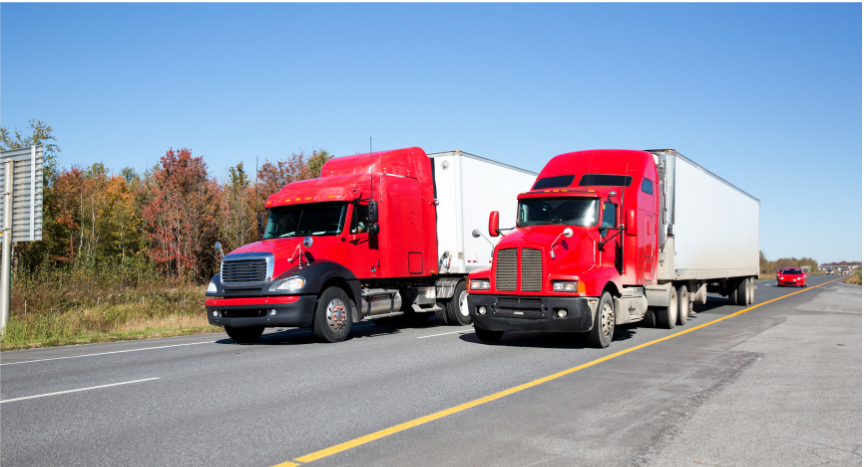
The Freightliner Cascadia and Volvo VNL have spent years competing for the same long-haul market, yet they reach that goal in different ways. Freightliner emphasizes flexibility through multiple engine options, a straightforward cab layout, and one of the largest dealer networks in North America. Volvo builds the VNL around an integrated drivetrain, a driver-focused interior, and technologies intended to improve comfort and efficiency over long distances. Looking beyond specifications reveals where each truck stands out and which design philosophy may better fit different operations.
Cab Design and Driver Environment
Freightliner designed the Cascadia with an emphasis on familiarity. The dashboard keeps controls within easy reach, gauges are easy to read at a glance, and the overall layout changes gradually between model years, allowing drivers to move between trucks with little adjustment. Large mirrors and a wide windshield also contribute to strong visibility during highway driving and while maneuvering around terminals or truck stops.
Volvo takes a different approach by shaping the cab around the driver’s seating position. The dashboard angles toward the seat, the steering wheel offers a wide range of adjustment, and the lower side windows improve visibility when turning or backing into loading docks. Those differences are subtle, but drivers spending weeks behind the wheel often notice the more driver-centered layout.
Sleeper Comfort and Living Space
Freightliner offers several sleeper configurations designed to maximize storage without adding unnecessary complexity. Cabinets, overhead compartments, under bunk storage, and durable interior materials reflect the truck’s focus on practicality and daily use across large fleet operations.
Volvo places greater emphasis on the living environment. The VNL incorporates additional sound insulation, flexible storage layouts, and sleeper designs intended to make extended time on the road more comfortable. Depending on the configuration, drivers may also find additional workspace and improved organization throughout the sleeper.
Both manufacturers provide enough interior space for regional and coast-to-coast operations, although the VNL generally places more emphasis on comfort while the Cascadia prioritizes function.
Engines and Powertrain
Freightliner gives buyers more flexibility by offering the Cascadia with Detroit DD13, DD15, DD16, and Cummins X15 engines. Most Detroit-powered models are paired with the DT12 automated manual transmission, allowing fleets to standardize around the powertrain that best matches their maintenance strategy or freight application.
Volvo centers the VNL around its proprietary D13 engine and I Shift automated manual transmission. Rather than offering multiple engine families, Volvo develops both components as a single integrated drivetrain, allowing the engine, transmission, and predictive shifting systems to communicate continuously while the truck is operating.
Both platforms provide horsepower and torque ratings capable of handling dry van, refrigerated, flatbed, tanker, and dedicated freight applications.
Fuel Efficiency Technology
Freightliner improves highway fuel economy through aerodynamic body panels, chassis fairings, predictive cruise control, idle reduction technologies, and Detroit’s integrated engine management systems. The truck’s aerodynamic profile has been refined over multiple generations to reduce drag while maintaining serviceability.
Volvo combines aerodynamic improvements with the I See predictive cruise system, which uses mapped terrain data to anticipate upcoming grades before the truck reaches them. By preparing the drivetrain in advance, the system can reduce unnecessary shifting and improve overall efficiency on rolling terrain.
Fuel economy differences between the two trucks often become smaller in real-world operation because vehicle speed, trailer specification, terrain, weather, payload, idle time, and driving habits have a greater influence on fuel consumption than the manufacturer alone.
Safety and Driver Assistance
Freightliner equips the Cascadia with Detroit Assurance, a suite of driver assistance technologies that can include adaptive cruise control, automatic emergency braking, lane departure warnings, collision mitigation, and electronic stability control depending on the model year and equipment package.
Volvo offers a comparable collection of active safety technologies throughout the VNL lineup, including collision warning systems, adaptive cruise control, lane support features, and electronic stability systems. Equipment varies by specification, making it important to compare individual trucks instead of assuming every model includes the same features.
Ride Quality
The Cascadia delivers a stable ride that many fleet drivers describe as predictable during long interstate runs. Steering response remains consistent, suspension tuning balances comfort with durability, and the truck performs well across a wide variety of freight applications.
The Volvo VNL has developed a reputation for placing additional emphasis on reducing driver fatigue. Cab suspension, seat ergonomics, steering adjustments, and interior noise reduction all contribute to a quieter driving experience that many operators notice during extended trips.
Neither truck sacrifices highway performance, but the VNL tends to receive more recognition for overall ride comfort while the Cascadia is often praised for its straightforward driving characteristics.
Maintenance and Service Support
Freightliner maintains one of the largest heavy-duty dealer and service networks in North America, giving fleets broad access to replacement parts and qualified technicians throughout the United States and Canada. That network can reduce downtime for carriers operating nationwide.
Volvo also supports its trucks through an extensive dealer network while continuing to expand connected vehicle technologies that provide maintenance reminders, remote diagnostics, and vehicle health monitoring. Those systems help fleets identify developing issues before they become more significant repairs.
Routine maintenance schedules remain comparable between the two platforms, and long-term operating costs are influenced more by preventive maintenance, utilization, and operating conditions than by the manufacturer itself.
Comparing the Freightliner Cascadia and Volvo VNL
The Cascadia appeals to fleets and owner-operators looking for engine flexibility, practical interior design, and widespread service support across North America. The VNL distinguishes itself through an integrated drivetrain, refined interior, and features designed to improve comfort during extended periods behind the wheel. Comparing engine configuration, sleeper layout, safety equipment, and intended application provides a clearer picture than focusing on the truck name alone because both platforms offer multiple specifications that can change the ownership experience.
Frequently Asked Questions
Which truck is more common in North American fleets?
The Freightliner Cascadia is widely considered the most common Class 8 highway tractor in North America, although the Volvo VNL is also heavily used by national and regional carriers.
Does the Freightliner Cascadia offer more engine choices than the Volvo VNL?
Yes. The Cascadia is available with multiple Detroit engines as well as the Cummins X15, while the Volvo VNL is primarily built around the Volvo D13 engine and I Shift transmission.
Is the Volvo VNL known for ride comfort?
Many drivers recognize the Volvo VNL for its emphasis on cab ergonomics, seat design, suspension, and interior noise reduction, making it a popular choice for long haul operations.
Which truck has the larger dealer network?
Freightliner operates one of the largest heavy-duty truck dealer networks in North America. Volvo also maintains extensive dealer coverage throughout the United States and Canada.
Should owner-operators compare model years as well as truck models?
Yes. Engine options, safety technology, sleeper layouts, transmissions, and available features can vary significantly by model year, making it important to compare the specific truck rather than relying only on the model name.