

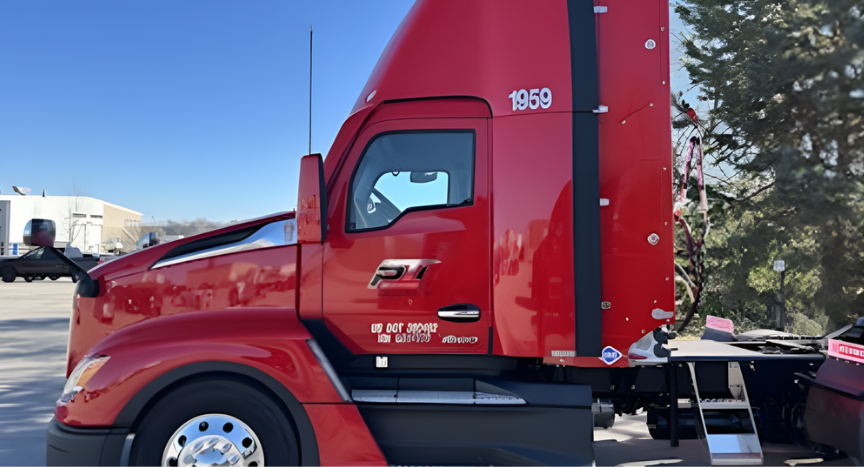
Paper Transport exceeded its 2025 alternative fuel goal by logging more than 5.36 million miles using renewable and compressed natural gas across its fleet. The De Pere, Wisconsin-based carrier finished the year at 5,365,231 natural gas-powered miles, surpassing its original five-million-mile target.
The milestone reflects the company’s long-term investment in alternative fuels and its focus on reducing diesel dependence while providing customers with measurable emissions data. By operating trucks fueled by renewable natural gas, Paper Transport reports lifecycle carbon emission reductions of up to 90 percent compared with traditional diesel equipment. Those reductions directly support customer Scope 3 emissions reporting, an area of growing importance for shippers.
“We don’t just run natural gas trucks, we build strategic, dedicated partnerships that make sustainable freight real,” said Jared Stedl, Paper Transport chief commercial officer. “Our ability to exceed this goal is only possible because of our customers, who are invested in long term emissions reduction.”
Natural Gas Infrastructure and Fleet Support
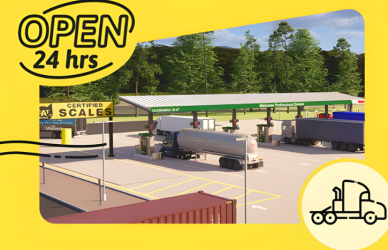
The availability of natural gas fueling infrastructure continues to play a key role in supporting fleet adoption across multiple regions. Wisconsin ranks among the top states for compressed natural gas fueling locations, with 44 public CNG stations.
Other states with significant CNG infrastructure include California with 318 stations, Oklahoma with 99, Texas with 95, Pennsylvania with 72, Florida with 59, and Georgia with 49. Nationwide, the total number of stations reached 1,385 dispensing CNG and 81 dispensing liquefied natural gas by the end of last year, according to The Transport Project.
Dedicated Partnerships Drive Results
Paper Transport attributes its progress to seven long-term dedicated partnerships with major shippers in the retail, packaging, and consumer packaged goods sectors. These relationships allow the carrier to build consistent lane density while embedding alternative fuels directly into shipper transportation networks rather than relying on offsets.
Since beginning its natural gas investment strategy in 2010, the company has logged more than 84 million cumulative natural gas miles. That transition has displaced approximately 13.6 million gallons of diesel fuel while supporting expanded lane density across the Midwest, Southeast, and Southern California.
Company leadership says the focus remains on measurable outcomes and transparent reporting for shipper partners.
“Reducing emissions in freight takes more than fuel; it takes commitment,” said Tyler Ellison, Paper Transport chief executive officer. “We’re proud to provide a proven model for shippers who want to embed sustainability into their transportation, not just their marketing decks.”
Source: Commercial Carrier Journal