
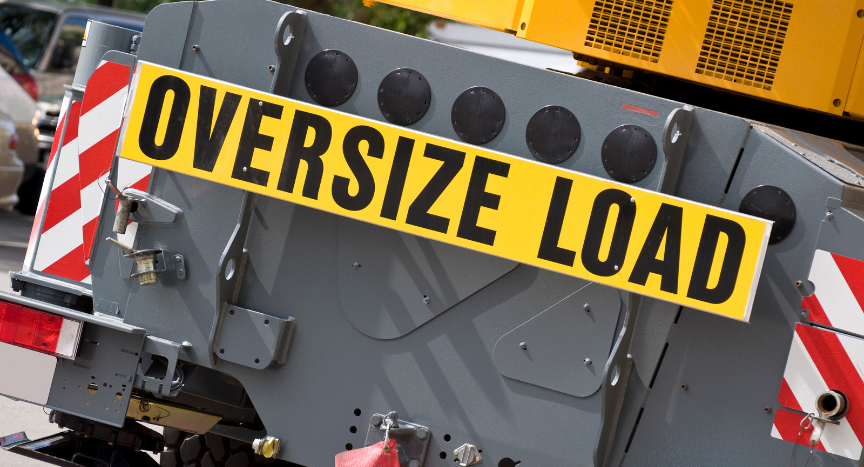
Moving an oversize or overweight load across several states requires more planning than securing permission at the starting point. The federal government establishes certain size and weight limits for commercial vehicles, but oversize and overweight permits are issued by individual states for travel within their borders.
That means a load running from Ohio to Texas, for example, may travel under several different permits before reaching the customer. Each one can establish its own route, travel times, escort requirements and other conditions, so the paperwork for the entire trip needs to be reviewed together rather than one state at a time after the truck is already moving.
Start With the Full Permit Package
A multi-state move can require separate authorization for every state along the route. Each permit is tied to the vehicle or load being moved and is valid only for the conditions established by the issuing agency.
Before departure, compare the permits side by side. Pay attention to where one authorization ends, where the next begins and whether any conditions change at the border. Travel dates, approved highways, escort requirements and permitted dimensions should all match the trip that has actually been planned.
The load information matters as well. A permit can become invalid when the actual dimensions, weight or configuration do not match what was approved, so final measurements should be consistent with the paperwork carried for the move.
Build the Trip Around the Approved Route
For an oversize load, route planning is not simply about finding the fastest road between two points. The route on the permit may have been selected around bridge capacity, overhead clearances, construction, roadway width or other conditions that affect whether the load can safely pass.
That makes an unplanned detour much more complicated than it would be on an ordinary freight run. A navigation app may show another highway nearby, but it cannot confirm that the alternate road was evaluated for the permitted dimensions or weight.
If construction, a crash or another closure blocks the approved route, the permitting agency should be contacted before the move continues on a different road. The agency that issued the permit is the one that can authorize a change.
Watch the Clock as Closely as the Route
Permitted travel hours can change during the same trip. One jurisdiction may allow movement throughout most of the day, while the next limits an oversize load during rush hour, at night or during certain weekend and holiday periods.
Those windows affect more than the day’s driving schedule. They can determine where a load needs to stop before crossing a border and whether an overnight break will put the truck in position to continue when the next travel window opens.
Reviewing those times before departure also makes it easier to spot a permit that does not line up with the overall schedule. Discovering at the border that movement cannot resume for several hours can throw off escorts, appointments and the rest of the trip.
Escort Needs Can Change Along the Way
Pilot-car requirements are controlled at the state level rather than through one nationwide federal standard. The number of escorts, where they travel in relation to the load and the equipment or qualifications required can therefore change during a multi-state move.
Some loads may also require law-enforcement assistance. The conditions depend on the dimensions, route and jurisdiction, so an escort setup that is acceptable for one portion of the trip should not automatically be carried into the next.
This is another reason to review the full route before leaving. If an additional pilot car or law-enforcement escort is required farther along, arranging it before the load reaches that point can prevent an avoidable stop.
The Last Few Miles May Need Their Own Approval
A state-issued permit may cover the highway portion of the trip without authorizing travel on locally controlled streets. FHWA guidance notes that city or municipal permission can be required separately.
That can become important near the pickup or delivery point, where the route leaves the state highway system and moves onto local roads. A manufacturing plant, construction site or other destination may be only a few miles from the permitted highway, but those final miles can involve a different authority.
Local streets can also present the tightest conditions on the entire move. Turning space, overhead utilities, traffic control and street width may all need to be considered before the truck leaves the main route.
Treat Every Border as a Change Point
The truck and load may look exactly the same after crossing a state line, but the operating conditions can change immediately. A different permit can bring a new route, a different travel window or another escort requirement.
For that reason, the most useful preparation happens before the trip starts. Organizing permits in route order and marking the major changes between jurisdictions makes the paperwork easier to follow once the load is moving.
The goal is not simply to have a permit for every part of the trip. It is to know what each one requires before reaching the point where those requirements take effect.
Frequently Asked Questions
Can one permit cover more than one state?
Oversize and overweight permitting is generally handled by individual states, so carriers commonly need authorization for each state included in the move. Some jurisdictions participate in regional permitting arrangements, but coverage should be confirmed before relying on one authorization across multiple states.
What happens if the actual load is larger than the dimensions listed on the permit?
The move should not proceed under paperwork that does not accurately describe the permitted vehicle or load. The permitting agency should be contacted so the authorization can be corrected or replaced before travel continues.
Do weather conditions affect an oversize permit?
They can. Individual permits or state rules may restrict movement during conditions such as poor visibility, snow, ice or high winds. The applicable permit and issuing agency’s current instructions determine whether the load can continue.
Can an oversize load travel through a city using only the state permit?
Not necessarily. Locally controlled streets may require separate authorization even when the state highway portion of the trip is properly permitted. This is especially important around pickups, deliveries and routes that leave the state highway system.
Are pilot-car requirements the same in every state?
No. Pilot and escort vehicle requirements are established by the states and can vary according to the dimensions of the load, the route and other conditions of the move.
The TDUSA editorial team creates practical, driver focused content covering trucking news, industry updates, safety, regulations, and career information for professional truck drivers across the United States. Each article is built to reflect real world experience, industry developments, and information drivers can use on and off the road.
Last Updated: October 2nd, 2026