

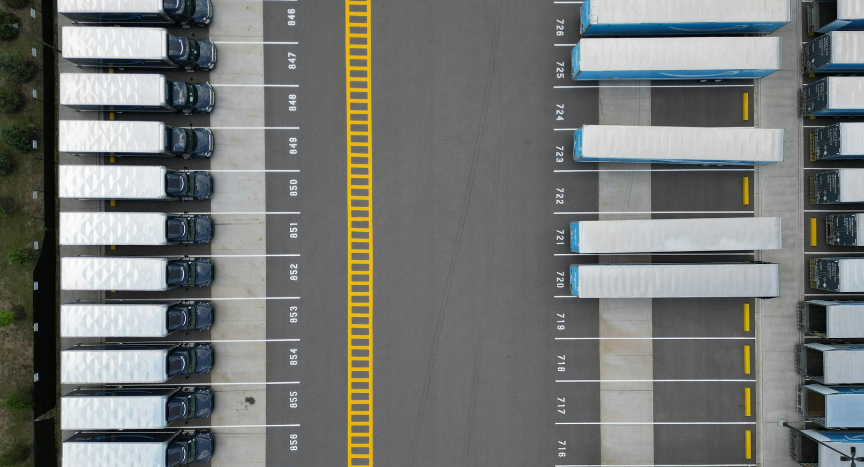
If you drive through major metros, you already know the pattern. Parking fills early, ramps get crowded, and legal spaces disappear fast. Federal agencies have acknowledged that truck parking shortages create safety and security problems and can push drivers into parking where trucks were never meant to be. At the same time, the U.S. Department of Transportation continues to assess how well states and regions are meeting commercial parking needs through Jason’s Law reporting and related surveys.
This guide explains how truck parking supply and demand behaves in different metro environments and outlines a planning method drivers can use to avoid last minute parking decisions that put safety and compliance at risk.
Why truck parking is harder in metro areas
Truck parking availability is not just about the number of spaces on a map. It is about timing, freight concentration, congestion, and how quickly a driver can reach a safe location once traffic slows.
Federal truck parking research consistently frames the shortage as a national issue with strong local variation. Parking demand rises sharply in metro areas during late afternoon and evening hours, while supply remains fixed and often constrained by land use restrictions and limited property near freight hubs.
In practice, this means a metro area with plenty of parking capacity on paper may still leave drivers without options when demand peaks.
Common metro parking patterns drivers encounter
Drivers can reduce risk by identifying the type of metro area they are entering and adjusting their stop strategy before the clock becomes the controlling factor.
| Metro environment | What typically drives parking shortages | How drivers should plan |
| Port and container markets | Terminal appointment waves and heavy drayage traffic | Plan a primary stop well outside the port area and identify a secondary zone farther out |
| Intermodal and rail hubs | Yard traffic, shift changes, and corridor congestion | Target parking earlier in the day and avoid arriving without a backup plan |
| Tourist and event driven metros | Seasonal surges and weekend travel | Treat peak weekends and holidays as high demand periods and stop earlier |
| Warehouse dense regions | Concentrated shipping and receiving windows | Choose parking before entering the warehouse belt rather than after |
| Mountain approach metros | Weather slowdowns and grade related delays | Secure parking before climbs and do not rely on post weather availability |
This framework is designed to scale into metro specific pages where freight generators, congestion points, and seasonal patterns can be documented and updated regularly.
A planning method that protects your hours and your options
Drivers who avoid parking emergencies plan for scarcity instead of hoping for availability.
Set a target stop time earlier than your legal limit
In metro areas, legal drive time is not the same as practical drive time. Parking often fills well before hours-of-service limits are reached. Building in an earlier target stop time preserves flexibility.
Choose parking zones instead of single locations
A zone is a cluster of nearby options rather than a single lot. If one location fills, having alternatives within a short distance prevents wasted drive time.
Avoid entering congestion late in the day
Crawling through traffic consumes drive time without bringing you closer to parking. When possible, stop before the congestion wall instead of after it.
Treat shipper and receiver delays as parking risks
Extended dwell time pushes your parking search later. When delays occur, adjust your plan immediately rather than waiting to see if time can be recovered.
Keep personal notes on decision points
Documenting why you stopped early or rerouted helps explain compliance decisions if questions arise later. This is about protecting yourself, not creating extra paperwork.
What to do when parking is already scarce
When options begin to disappear, shift from searching to controlling the outcome.
Move to your backup zone early instead of circling a single location. Do not burn remaining drive time hoping for a spot to open. If a short reposition now prevents a forced decision later, make the move while flexibility remains.
Early communication also helps prevent unrealistic appointment expectations on the next leg of the trip.
Turning this framework into metro specific guides
Each metro area can follow the same structure while remaining locally accurate.
A strong metro page includes a summary of why parking fills early in that region, a breakdown of freight activity driving demand, clearly defined primary and secondary parking zones, and a short FAQ section based on real driver questions. Seasonal updates tied to construction cycles, weather patterns, or tourism demand keep the content current.
This approach aligns with federal efforts under Jason’s Law to better understand local truck parking needs and shortages.
Frequently asked questions about metro area truck parking
What time do truck parking lots usually fill up near major metros?
This varies by location and season, but lots near dense freight activity typically fill earlier than rural corridors. Planning around a target stop time rather than a legal limit reduces risk.
Why does parking feel worse even when there appear to be more lots available?
Demand often rises faster than supply, and many drivers reach metros at the same time. Federal research shows that parking shortages are shaped by local demand patterns, not just total space counts.
What is the safest way to handle a full parking lot when time is limited?
Move to your backup parking zone while you still have legal flexibility. Circling consumes time and reduces remaining options.
How can drivers plan parking in unfamiliar metro areas?
Identify the metro type first, such as port driven, intermodal, tourist, or warehouse focused, then plan earlier stops than you would on rural routes.
Why Metro Parking Planning Matters for Truck Drivers
Metro area parking shortages are predictable when drivers plan around demand instead of availability. Understanding how different metros behave allows drivers to protect their time, maintain compliance, and avoid unsafe parking decisions.