

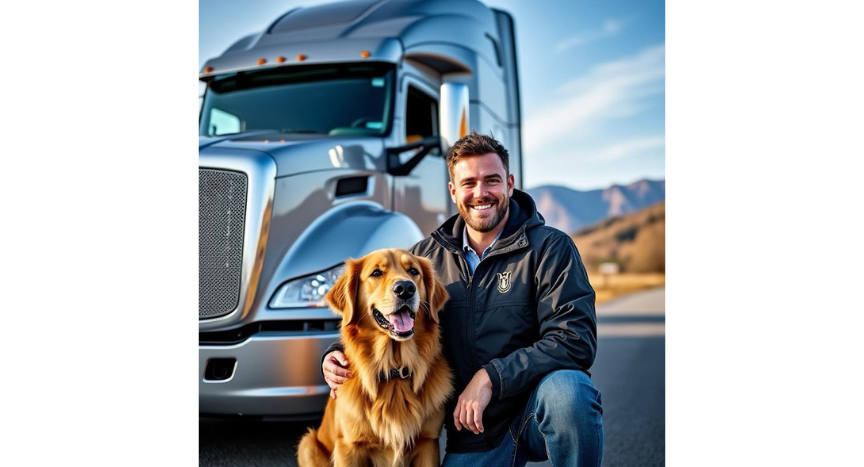
For many over-the-road (OTR) drivers, long hours on the road can feel isolating. That’s one reason more truckers are choosing to bring a pet along for the ride. Whether it’s a dog, cat, or even a smaller animal, having a furry co-pilot adds comfort and companionship. But hitting the road with a pet isn’t as simple as putting them in the passenger seat—it takes planning, responsibility, and the right setup.
1. Understand Your Company’s Pet Policy
Before anything else, check with your carrier. Not all companies allow pets in their trucks, and those that do often have strict guidelines. For example, Roehl Transport allows pets but requires a non-refundable deposit and proof of vaccinations. Prime Inc. also permits dogs or cats under 30 pounds with a signed pet policy agreement. Common restrictions include size or breed limitations, spay/neuter requirements, and specific paperwork.
If you’re an owner-operator, you’ll have more freedom, but it’s still worth confirming that any customer-facing policies (especially at certain docks or facilities) won’t prevent you from having a pet in the cab.
2. Keep Legal Documents Handy
Traveling across state lines with a pet means carrying the right paperwork. At a minimum, you should have:
A current rabies certificate
Proof of vaccinations and vet visits
A Certificate of Veterinary Inspection (CVI), especially for newer pets or certain states
These documents may be requested during inspections or at weigh stations. Keeping them organized in a folder or digital format ensures you’re never caught off guard.
3. Safety Comes First
Unrestrained pets in a moving truck are not just distracting—they’re a safety hazard. Use crash-tested pet seat belts, harnesses, or secure crates. Make sure your setup keeps the pet comfortable while preventing movement during sudden stops.
Also, consider adding a barrier between the front seats and the sleeper area to create a safe “rest zone” for your pet while you drive. According to the American Veterinary Medical Association, proper restraint can protect both you and your pet in an accident.
4. Never Leave Pets in a Parked Truck
The inside of a cab can heat up fast—even with the windows cracked. According to the National Weather Service, vehicle interiors can rise more than 30°F in just 30 minutes. Leaving a pet in a hot cab, even briefly, can be fatal. If you’re stopping for fuel, food, or a break, plan ahead to make sure your pet can stay safe. Use window shades, fans, or idle-management systems with built-in climate control when absolutely necessary.
5. Ease into Road Life
Just like humans, pets need time to adapt. Start with short trips to help your pet get comfortable in the truck. Gradually increase trip length and maintain a consistent routine. Bring familiar items like a bed, toys, or blanket to create a sense of comfort.
Also, be prepared for accidents. Keep pet-safe cleaning supplies on hand, and make sure your rig is stocked with extra food, water, waste bags, and travel bowls.
6. Plan Regular Breaks
Pets need regular exercise and bathroom breaks—just like their humans. Plan stops every few hours and avoid areas with high truck traffic for safety. Rest areas with grassy patches or pet relief zones can be helpful. Some drivers also recommend using apps like BringFido or Trucker Path to find pet-friendly stops on the route.
Routine stops not only help your pet stay healthy but also give you a chance to recharge mentally and physically.
7. Enjoy the Benefits
Beyond companionship, pets can offer a range of benefits for truckers. They help relieve stress, encourage physical movement during breaks, and even provide a sense of security while parked overnight. Studies have shown that pet ownership can reduce anxiety and depression, both of which are common challenges among long-haul drivers.
Trucking with a pet can make life on the road more enjoyable—but it also requires commitment. By following company policies, keeping your pet’s documents up to date, and focusing on safety and comfort, you can build a routine that works for both of you. With the right preparation, a four-legged co-pilot might just be the best addition to your rig.