
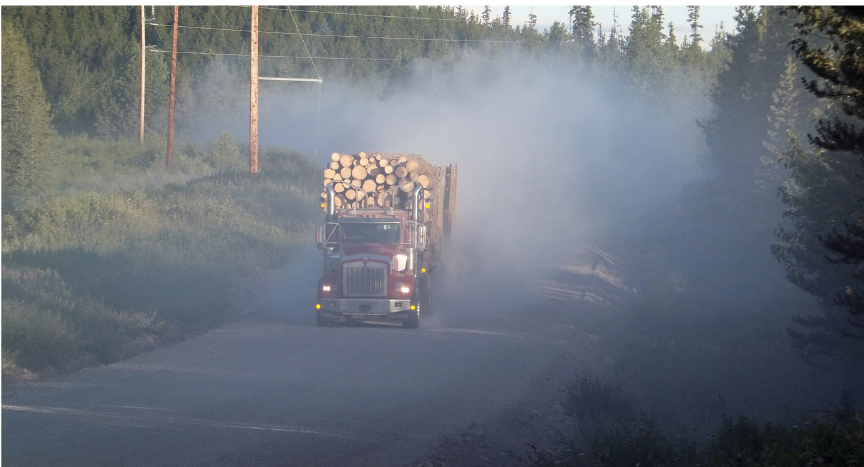
A highway closure during wildfire season can catch truck drivers off guard. Traffic comes to a stop, the road ahead looks normal, and there isn’t a flame in sight. It’s easy to assume the closure is an overreaction until you consider the information emergency managers are working with.
By the time a driver reaches a closure point, the decision has often been made using forecasts, fire behavior models, and conditions developing miles away from the highway. Waiting until smoke or flames become obvious would leave far fewer options for drivers, emergency crews, and nearby communities.
A Clear Highway Doesn’t Always Mean a Safe Highway
Wildfires rarely move in a predictable direction. Wind shifts, steep terrain, and dry vegetation can change the pace and direction of a fire in a matter of minutes.
That’s one reason transportation agencies rely on fire behavior forecasts rather than visible conditions alone. If projections show a fire is likely to threaten a corridor or reduce visibility before traffic can safely clear the area, restrictions may be introduced well before the roadway itself is affected.
For drivers approaching the area, the closure can seem unnecessary. For the people managing the incident, it’s often intended to prevent a much larger problem from developing an hour later.
Smoke Creates Challenges Drivers Never See
Most drivers think of smoke as a visibility issue, but that’s only part of the picture.
Aircraft used to monitor fire activity or drop water may be grounded when smoke becomes too dense. Fire crews working along the highway can lose sight of changing fire conditions. Emergency vehicles entering and leaving the incident also need predictable traffic patterns to move safely.
Those factors can influence traffic decisions long before visibility reaches the point where most drivers would expect a highway to close.
Detours Don’t Always Work for Commercial Trucks
Passenger vehicles can often be redirected onto local roads with relatively few limitations. Commercial trucks don’t always have that flexibility.
A detour that looks reasonable on a map may include bridges with lower weight limits, intersections that are difficult for longer combinations to navigate, or restrictions that prevent oversized loads from using the route altogether. In some cases, holding trucks temporarily is safer than directing them onto roads that were never designed to handle heavy commercial traffic.
That’s why commercial drivers may encounter instructions that differ from those given to passenger vehicles during the same incident.
Reopening a Freight Corridor Takes More Than Extinguishing the Fire
The public often focuses on the moment a wildfire is contained. For transportation agencies, another phase begins.
Bridge inspectors check structures that were exposed to prolonged heat. Maintenance crews remove trees that could fall into the roadway. Engineers evaluate slopes where burned vegetation no longer helps stabilize soil. Utility companies restore damaged infrastructure before traffic returns to normal.
None of those tasks receive much public attention, but they often determine when restrictions can safely be removed.
The Goal Is to Prevent Drivers from Running Out of Options
Wildfire closures are based as much on where conditions are headed as where they are today. Once traffic becomes trapped between a fast-moving fire and a blocked highway, there are very few good solutions.
Restricting traffic before that happens may inconvenience drivers, but it also gives emergency responders room to work, protects evacuation routes, and reduces the likelihood that motorists become part of the emergency itself.
Frequently Asked Questions
Do wildfire closures affect interstate highways differently than state highways?
No. Any highway may be restricted if emergency officials determine travel conditions have become unsafe. The decision depends on conditions surrounding the incident rather than the highway designation.
Why are commercial trucks sometimes held longer than passenger vehicles?
Large trucks require more space to maneuver, accelerate more slowly, and may not be able to use every available detour. Those factors can influence how traffic is managed during an active wildfire.
Can roads reopen even if firefighters are still working nearby?
Yes. Portions of a highway may reopen while firefighting operations continue in surrounding areas if transportation officials determine traffic can move safely through the corridor.