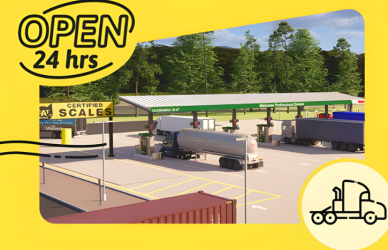



Truck drivers and industry groups have been urging federal officials to prioritize truck parking for years. Now, those efforts are finally yielding results, with the U.S. Department of Transportation (DOT) rolling out over $275 million in funding dedicated to solving one of trucking’s most persistent problems: parking.
Years of Advocacy and a Tragic Catalyst
Finding a safe, legal place to park has been a daily struggle for truck drivers across the country. For much of the 21st century, the lack of parking has left drivers with few good options, forcing many to risk their safety. It wasn’t until advocacy organizations spoke up—most notably the Owner-Operator Independent Drivers Association (OOIDA)—that federal and state leaders began to take the problem seriously.
A pivotal moment came after the murder of truck driver Jason Rivenburg, who lost his life when he was forced to stop overnight at an unsafe location after being turned away from an early delivery. That tragedy led directly to Jason’s Law in 2012, which tasked federal agencies with assessing and reporting on national truck parking availability.
When the initial survey results landed in 2015, they reinforced what drivers already knew: truck parking was woefully inadequate. But improvements were slow, and a follow-up in 2020 confirmed that little headway had been made.
Legislators Push for Solutions
Driven by the survey results, lawmakers and OOIDA renewed their campaign for action. In 2020, Rep. Mike Bost (R-Ill.) introduced the Truck Parking Safety Improvement Act—a proposal to allocate $755 million specifically for building new, free parking spots for truckers.
OOIDA threw its weight behind the bill from the start. “Growing up in a family trucking business, I know how hard it can be to find a safe place to stop and rest,” Bost explained, emphasizing why he has “led efforts in Congress to expand truck parking and fight for common sense reforms that make life easier and safer for truckers.”
The measure faced obstacles in Congress, and although it stalled in committee, support grew steadily. OOIDA spurred drivers into action through Calls to Action and their FightingForTruckers.com website, while Executive Vice President Lewie Pugh continued providing congressional testimony on the issue. Over several sessions, the bill’s list of Democratic and Republican co-sponsors increased as awareness spread.
DOT Launches the “Pro-Trucker Package”
Momentum built as a new federal administration entered office. On June 27, Transportation Secretary Sean Duffy laid out the department’s “Pro-Trucker Package,” a series of reforms aimed at truck driver well-being and safety.
A major highlight of the package is the $275+ million commitment to expand truck parking across the U.S. The 2024 round of grants already included $180 million for Florida, providing more than 900 much-needed spaces along Interstate 4, a perennial trouble spot for parking.
“These steps not only improve the daily lives of truckers across America but also enhance safety for everyone on the road,” said OOIDA President Todd Spencer.
Other DOT efforts in the package include pulling back on speed limiter regulations, updating the hours-of-service rules to offer drivers more flexibility, and modernizing digital resources such as the National Consumer Complaint Database for drivers.
Importantly, the DOT will also be labeling truck parking as a “national priority” under Jason’s Law, which will unlock access to grant programs that can move additional parking construction projects forward.
A Turning Point for the Trucking Community
For truckers, this $275 million initiative is more than just government spending—it’s long-overdue recognition of their crucial work and the unique challenges they face. Solving the parking problem addresses a critical safety concern and helps drivers spend more time moving America’s freight, not searching for a place to park.
The Road Ahead
The shortage is not solved overnight, but this level of funding marks a historic step forward. OOIDA and supporting lawmakers plan to keep pushing for additional resources and program improvements to ensure truckers’ continued safety and comfort.
With fresh investment and a renewed focus on truck driver needs, the industry is poised for safer roads, smarter regulations, and more secure rest for those who keep goods moving nationwide. All eyes will be on how these changes unfold and on the benefits delivered to drivers and the traveling public alike.
Source: Land Line