
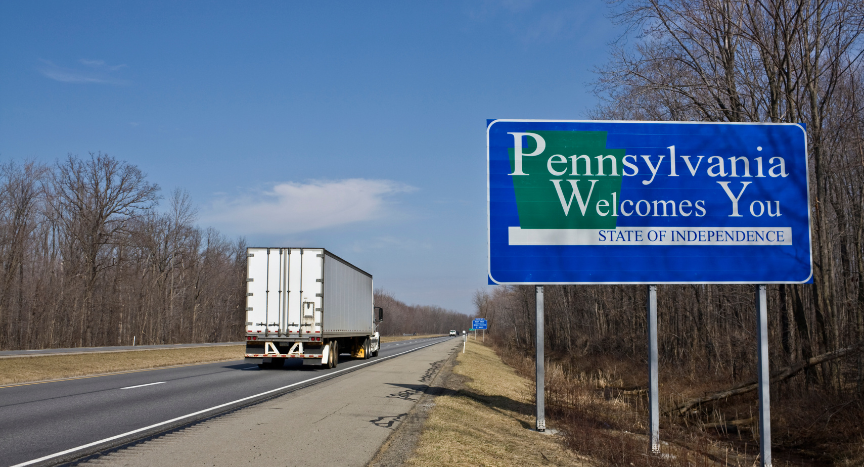
Pennsylvania plays a major role in Northeast freight movement because of its warehouse networks, manufacturing activity, food distribution, retail freight, and interstate shipping routes connecting multiple regions of the country.
Getting a commercial license in Pennsylvania starts with obtaining a Commercial Learner Permit before moving into formal training and testing. Applicants must also complete federally required training and meet Department of Transportation medical standards before taking the final road exam.
Pennsylvania Commercial License Requirements
Anyone applying for a commercial license in Pennsylvania must already hold a valid Pennsylvania driver’s license and provide proof of identity and residency during the application process. A Department of Transportation medical exam is also required to confirm that the applicant meets federal qualification standards for operating commercial vehicles safely.
Drivers can qualify for intrastate commercial driving at 18 years old in Pennsylvania. Interstate driving, hazmat transportation, and crossing state lines require drivers to be at least 21 years old. Most over-the-road carriers follow that interstate requirement when hiring new drivers.
Training Requirements Before the Road Test
Federal Entry Level Driver Training rules apply to first-time Class A applicants. That training must come from a provider listed in the FMCSA Training Provider Registry before the applicant can complete the skills exam.
Most Pennsylvania training programs combine classroom instruction with hands-on driving practice. Students usually spend time learning pre-trip inspections, backing maneuvers, air brake systems, hours of service rules, vehicle control, and road driving skills before moving into test preparation.
Program length varies depending on whether students attend full-time or part-time. Some schools can be completed within several weeks, while evening programs may take longer, depending on training schedules and driving availability.
What The Pennsylvania Testing Process Includes
After receiving a Commercial Learner Permit and completing required training, applicants move into the testing phase. Written exams normally include general knowledge, air brakes, and combination vehicle testing for Class A licensing. Additional endorsements may be required for tanker, doubles, triples, or hazmat transportation, depending on the type of freight the applicant plans to haul later.
The Pennsylvania skills exam generally includes a pre-trip inspection, backing exercises, vehicle control testing, and an on-road driving evaluation. Mistakes involving unsafe operation, traffic violations, missed inspection items, or poor vehicle control can result in automatic failure depending on the testing situation.
How Much Does Training Cost in Pennsylvania
The total cost depends heavily on the training path chosen. Independent schools may charge several thousand dollars, depending on driving time and program structure. Community college programs sometimes cost less, while certain carriers offer sponsored training tied to employment agreements after graduation.
Additional expenses may include permit fees, licensing fees, endorsement testing fees, DOT physical exams, drug testing, and study materials.
When comparing schools, students often look closely at behind-the-wheel driving time, instructor experience, equipment condition, job placement support, and whether the program requires employment contracts after graduation.
Truck Driving Opportunities Across Pennsylvania
Pennsylvania supports several types of trucking work because of its location within major freight and distribution networks. New drivers may find opportunities involving dry van freight, refrigerated freight, flatbed hauling, food distribution, warehouse transportation, retail freight, manufacturing freight, and local delivery routes.
Freight activity around Philadelphia, Pittsburgh, Allentown, Harrisburg, and Scranton supports hiring across multiple areas of the trucking industry.
Some drivers stay in over-the-road trucking long term, while others eventually move into local routes, specialized freight, private fleets, or owner-operator work after gaining more experience behind the wheel.
The Truck Drivers USA editorial team creates practical, driver-focused content covering industry topics, job trends, and real-world decisions that impact drivers at every stage of their careers. Each article is written to provide clear, accurate information that drivers can use.
Last updated: May 26, 2026