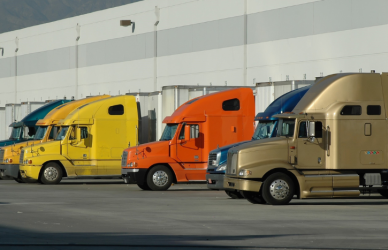



The trucking industry is heading into one of the biggest shakeups in its history. Freight volumes are falling, regulations are tightening, and economists warn that as many as 600,000 active drivers could be pushed out of the market. Experts are calling it the largest capacity purge ever seen in U.S. trucking, a period that could completely reshape how freight moves across the country.
The Calm Before a Freight Storm
Right now, trucking feels stuck in neutral. Freight demand is weak, spot rates have cooled, and both carriers and brokers are under strain. Many in the industry describe this moment as the calm before the storm, with indicators pointing toward a major correction that could rival the market chaos of the COVID years.
The warning is clear: if 600,000 drivers leave the market, capacity will tighten quickly and spot rates could skyrocket. Unlike during the pandemic, there will be no surge of new immigrant drivers to fill the gap. That relief valve, once supported by open immigration policies, is now closed. Carriers will have to compete harder for qualified drivers through better pay, sign-on bonuses, and improved working conditions.
What’s Fueling the Freight Downturn
Freight volumes are down 18 percent year over year, hitting carriers of every size. For freight brokers, the challenge is even tougher. With fewer loads to move, margins have evaporated. Some are stuck with contract rates signed too low to stay profitable, forcing them to compete against asset-based carriers while losing money on every run.
Small fleets are feeling the squeeze most. Many have relied on non-domiciled CDL drivers, but new federal regulations around English Language Proficiency are cutting off that supply. On top of that, fraud in load boards and verification systems has exploded. Scammers have found ways to manipulate tools like Highway and RMIS, forcing brokers to be more cautious.
That means even legitimate carriers can be flagged by mistake. Once that happens, they can be locked out of most brokerage freight entirely, which can be a death blow for smaller operations already struggling to stay afloat.
How New Rules Could Wipe Out 600,000 Drivers
This expected capacity purge ties directly to federal regulatory changes and immigration enforcement already underway. According to research from J.B. Hunt, new rules for non-domiciled CDL holders and English Language Proficiency requirements could remove between 214,000 and 437,000 drivers, roughly 5 to 12 percent of the U.S. driver pool over the next few years.
On September 26, 2025, the Federal Motor Carrier Safety Administration issued an emergency ruling that restricts the issuance and renewal of non-domiciled CDLs. Officials estimate that 97 percent of the 200,000 drivers who currently hold those licenses will not meet the new standards and will likely exit the industry within three years. That alone represents 5 percent of all registered CDLs in the country.
Stricter enforcement of English Language Proficiency standards has already led to 23,000 violations, including 5,000 out-of-service orders. Analyst Avery Vise projects that this enforcement could sideline about 20,000 drivers each year.
When combined with limits on undocumented drivers and new hiring restrictions, transport economist Noël Perry estimates that more than 600,000 drivers, about 17 percent of the active workforce, could be removed from trucking.
Carriers that rely heavily on immigrant labor or those unable to comply with the new regulations may not survive this purge.
The Economic Ripple Effect
These rule changes, combined with a long freight recession, are creating a perfect storm for widespread bankruptcies. Both carriers and brokers are tightening budgets and consolidating operations as the industry braces for a market reset.
The shakeout is expected to favor larger, well-capitalized carriers who can handle the new compliance demands and stay profitable through the downturn. Smaller carriers that grew quickly during the post-COVID freight boom may not have the financial cushion to adapt.
As capacity tightens, driver pay is likely to rise. Carriers will need to offer stronger incentives to attract qualified drivers from a shrinking talent pool. The shift could finally bring the market back to a more balanced place where supply and demand set the rates naturally instead of desperation driving them down.
What Comes Next
The road ahead will be rough, but it could lead to a healthier trucking market. Analysts predict that after the purge, spot rates will rise again, contract rates will stabilize, and carriers that survive will see more consistent freight and fairer pricing.
The exact timing of this recovery is uncertain, but the direction is clear. Shippers should prepare for higher rates and tighter capacity, while carriers who manage to weather the storm will be well-positioned when freight rebounds.
As one industry expert put it, “If volumes pop—which doesn’t exist right now—hold on to your hat. It’s going to be one of the best freight markets that carriers have seen in some time.”
It may take time and patience to reach that point, but for those who make it through, the rewards could be worth the wait.
Source: FREIGHTWAVES