

Engine brakes are an important speed-control tool for truck drivers, particularly on long or steep downgrades, but the rules governing their use can change quickly when a driver crosses a state line or enters a city or town. There is no single nationwide ban on “Jake brakes,” and many of the signs drivers encounter are the result of state muffler requirements or local noise ordinances rather than a federal prohibition on engine braking.
That distinction matters because some jurisdictions prohibit engine brake use almost entirely, others target only unmuffled or excessively loud systems, and some states protect the use of properly muffled engine brakes. Drivers running unfamiliar routes should understand both the statewide law and any local restrictions posted along the road.
Why Engine Brake Restrictions Exist
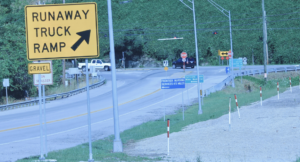
A compression-release engine brake uses the engine to help slow a truck without relying entirely on the service brakes. Commercial driver guidance emphasizes the importance of engine braking on grades because repeated or excessive use of service brakes can generate enough heat to contribute to brake fade. Oregon’s Commercial Driver Manual, for example, instructs drivers to use the braking effect of the engine as the principal method of controlling speed on downgrades and describes engine, exhaust, hydraulic and electric retarders as tools that reduce the need for service-brake use.
The problem addressed by most engine brake ordinances is noise rather than the braking technology itself. An engine compression brake can create significantly more noticeable exhaust noise when a truck has an inadequate, modified, or missing muffler, which is why several states regulate the exhaust system instead of prohibiting the braking system.
Delaware Has One of the Broadest Statewide Restrictions
Delaware law is unusually restrictive. Under Title 21, Section 4303(c) of the Delaware Code, vehicles operating on state highways generally may not use a braking system attached to or integral with the engine or exhaust system except in an emergency. The law does not prohibit a vehicle from being equipped with such a system, and it provides exceptions for emergencies and emergency vehicles.
Delaware also separately requires commercial vehicles equipped with an engine compression brake to have a muffler in good working order and operating according to manufacturer specifications. A violation of the commercial-vehicle muffler requirement carries a $500 fine under state law.
For drivers traveling I-95, U.S. 13 or other Delaware routes, that means a properly muffled system does not automatically make routine engine-brake use permissible because the state’s braking statute separately restricts when the system can be used.
Washington Regulates Engine Brakes and Allows Stricter Local Rules
Washington takes a different approach. State law applies to vehicles with a gross vehicle weight rating of 10,001 pounds or more that are registered and domiciled in Washington and equipped with an engine compression brake. Those vehicles may not use the compression brake unless they have an operational muffler and exhaust system designed to prevent excessive noise. Washington specifically states that a turbocharger does not count as a muffler or noise-dissipating device.
The penalties under Washington law increase from $250 for a first violation to $500 for a second violation and $750 for subsequent violations. The statute also expressly allows local jurisdictions to establish engine-brake ordinances that are more restrictive than the statewide requirement.
That local authority is important for drivers because a truck that complies with the statewide muffler requirement can still encounter a city ordinance prohibiting compression-brake use. Medical Lake, Washington, for example, prohibits compression-brake use within the city, with an affirmative defense when the brake was necessary during an emergency to protect people or property. Duvall has a similar citywide restriction.
Montana Protects Properly Mufflered Engine Brake Use
Montana’s statewide rule takes nearly the opposite approach from a complete local ban. Montana requires a commercial motor vehicle equipped with an engine compression brake to have a muffler in good working condition to prevent excessive noise. State law also says an operator whose truck has a factory-installed muffler or equivalent aftermarket muffler may not be prohibited from using the engine compression brake.
For drivers crossing Montana on routes such as I-90, I-94 or I-15, the condition of the exhaust system is therefore central to compliance. The state law is designed around controlling excessive noise while preserving the ability to use a properly muffled engine brake.
Connecticut Requires a Working Muffler
Connecticut law requires every truck, tractor, or truck tractor equipped with an engine compression brake device to also have a muffler for that device in good working condition. A driver operating a vehicle that violates the requirement can face a fine of up to $500, in addition to penalties that may apply under the state’s motor vehicle noise limits.
Unlike a straightforward prohibition on engine braking, Connecticut’s statewide provision focuses on the equipment that controls the resulting noise. Drivers should still watch for any posted local restrictions when leaving major interstate corridors and entering municipalities.
Colorado Requires Commercial Vehicles with Engine Brakes to Have Mufflers
Colorado law requires commercial vehicles equipped with an engine compression brake to have a muffler. The state has also enacted a more detailed commercial-vehicle muffler law that will take effect July 1, 2027, requiring qualifying commercial vehicles to have a muffler that can be visually inspected or to carry specified documentation showing that a compliant muffler was installed.
The 2027 law increases the penalty for violating the commercial-vehicle muffler requirement to $1,000, with provisions allowing the court to waive or reduce the fine when the owner or operator can document prior compliance or promptly installs an appropriate muffler. Because that change is not yet effective, drivers operating in Colorado in 2026 remain subject to the current law while fleets should be aware of the stronger requirements scheduled for 2027.
Local Jake Brake Ordinances Extend Far Beyond These States
State statutes provide only part of the picture because cities and counties across the country maintain their own engine-brake rules. Current municipal codes show restrictions in communities in Texas, Utah, Wisconsin, Oklahoma, Alabama, Georgia, North Carolina, Louisiana, Michigan and other states.
Kaysville, Utah, prohibits use of a dynamic braking device within city limits except when needed to avoid imminent danger. Fort Atkinson, Wisconsin, prohibits the use of dynamic braking devices except in an emergency to avoid a collision, while Iron Mountain, Michigan, prohibits compression brakes within the city except when necessary to protect people or property.
Texas illustrates why drivers cannot assume the rules are identical from one town to the next. Texarkana prohibits engine compression braking that produces excessive, loud, unusual, or explosive noise and provides an emergency defense, while Cotulla broadly prohibits compression brakes within the city and directs the placement of “ENGINE BRAKE PROHIBITED” signs at its boundaries. New Braunfels focuses its prohibition on engine braking that produces excessive or unusual noise and includes an exception when use is reasonably necessary to avoid an accident.
Louisiana provides an even more route-specific example. St. Charles Parish restricts unmuffled engine-brake use on designated sections of U.S. 90, Louisiana Highway 18 and I-310 ramps rather than applying one rule to every road in the parish.
What “No Jake Brake” Signs Actually Mean Can Vary
Drivers should not assume every engine-brake sign carries the same legal meaning. Depending on the jurisdiction, the rule may prohibit all nonemergency compression-brake use, prohibit only unmuffled engine braking, prohibit engine braking that exceeds a noise standard, or apply only on a particular street or section of highway.
The wording of the applicable ordinance matters more than the nickname used on the sign. “Jake Brake” is commonly used to describe compression-release engine brakes, but state and municipal laws may instead use terms such as engine compression brake, dynamic braking device, compression brake, engine retarder or mechanical exhaust device.
A Legal Engine Brake Still Needs a Legal Exhaust System
The most consistent theme across state laws is the importance of an intact muffler and exhaust system. Washington, Montana, Delaware, Connecticut and Colorado all have provisions tying commercial-vehicle engine braking or operation to muffler requirements.
For owner-operators and fleets, removing, bypassing, or failing to maintain exhaust components can therefore create compliance problems beyond ordinary equipment maintenance. It may also eliminate protections that would otherwise allow a driver to use an engine brake in jurisdictions where properly muffled systems are permitted.
Drivers Should Check Local Rules Before Running an Unfamiliar Route
Engine-brake restrictions are especially common where major truck routes pass through residential areas, smaller communities or developed corridors. Because many restrictions are enacted locally, there is no reliable nationwide assumption that a truck complying with one state’s equipment rules can use its engine brake everywhere within that state.
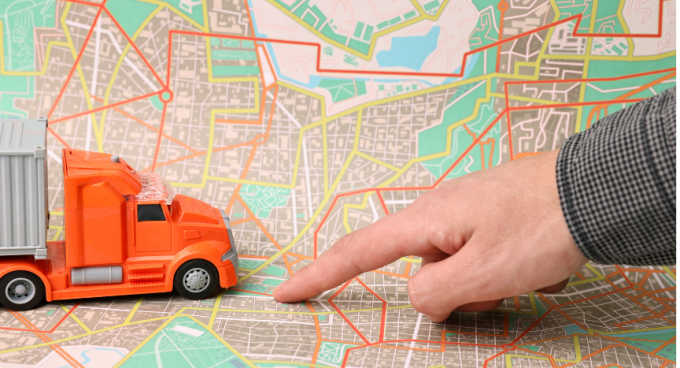
Route planning should include attention to posted engine-brake signs, particularly when leaving an interstate or traveling through towns on U.S. and state highways. Drivers should also distinguish between a law that limits routine use and one that regulates excessive noise, while always prioritizing safe vehicle control when an ordinance contains an emergency exception.
Commercial driver guidance remains clear about the safety role of engine braking on steep grades. The practical challenge is using that braking capability while complying with the specific state and local rules governing the road a driver is traveling.
Frequently Asked Questions
Can a driver be cited even if there is no “No Jake Brake” sign?
Yes. A posted sign can alert drivers to a restriction, but the enforceability of an ordinance does not always depend on whether a driver noticed a particular sign. Local traffic and noise laws may still apply within a jurisdiction, so drivers should not rely on signage alone when determining whether engine-brake use is permitted.
Does an engine brake restriction apply to exhaust brakes too?
It can. Some ordinances specifically refer to compression-release brakes, while others use broader language such as dynamic braking devices, engine retarders or exhaust braking systems. Drivers should check the terminology used by the state or municipality because the wording determines which systems are covered.
Can a local engine brake rule apply only to one road?
Yes. Some jurisdictions restrict engine braking on specific streets, highway segments, or approaches rather than throughout the entire city or county. Drivers may legally use an engine brake on one part of a route and encounter a restriction only a few miles later.
Should engine brake restrictions be considered during route planning?
Yes. Drivers operating through unfamiliar towns, mountain corridors, or residential areas can benefit from checking local restrictions in advance, especially when the planned route leaves the interstate. Doing so can help avoid unexpected noise restrictions without sacrificing safe speed-control planning on grades.
The TDUSA editorial team creates practical, driver-focused content covering trucking news, industry updates, safety, regulations, and career information for professional truck drivers across the United States. Each article is built to reflect real-world experience, industry developments, and information drivers can use on and off the road.
Last Updated: August 13, 2026